

The percentage of alcohol in wine is far more than just a number on a label; it is a structural pillar that defines the body, flavor profile, and preservation of the wine. Whether you are sipping a delicate Riesling or a robust Shiraz, understanding the role of ethanol—the primary alcohol in wine—is key to appreciating the craft.
At winesandjobs.com, we are passionate about the intersection of wine appreciation and career growth within the thriving wine industry.
The Role of Alcohol in Wine
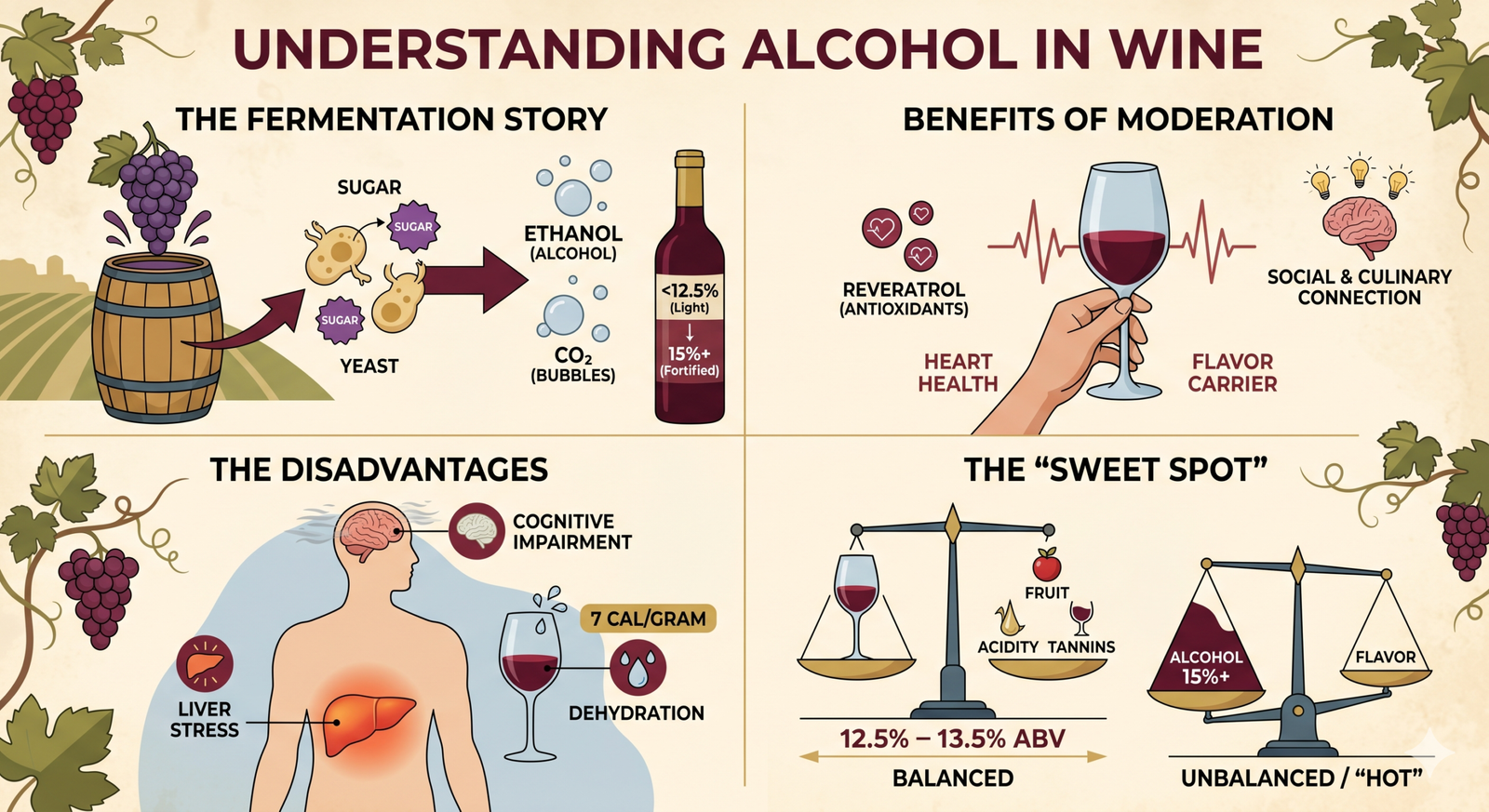
Alcohol is produced during fermentation when yeast consumes the natural sugars in grape juice and converts them into ethanol and carbon dioxide.
1. Body and Texture
Alcohol is “viscous,” meaning it is thicker than water. Higher alcohol levels give wine a “fuller body” or a heavier mouthfeel. When you see “legs” or “tears” streaming down the side of a wine glass, you are seeing the Gibbs-Marangoni Effect, a result of surface tension caused by the evaporation of alcohol.
2. Flavor Perception
Alcohol acts as a flavor carrier, transporting aromatic compounds from the glass to your nose. However, if the alcohol is too high and not “balanced” by fruit and acidity, it can create a “hot” sensation—a burning feeling in the throat. Understanding this nuance is crucial for anyone exploring sommelier or hospitality roles showcased on our platform.
3. Preservation
Historically, alcohol was the primary preservative in wine. Higher alcohol wines (and fortified wines like Port) are naturally more resistant to bacteria and spoilage.
When is Alcohol “Good” vs. “Harmful”?
The Quality Scale (ABV – Alcohol by Volume)
| Category | ABV Range | Characteristics |
| Low Alcohol | Under 12.5% | Usually light-bodied, high acidity (e.g., Moscato, German Riesling). |
| Medium Alcohol | 12.5% – 13.5% | The “sweet spot” for many food-friendly European wines (e.g., Chianti, Bordeaux). |
| High Alcohol | 14% – 15% | Full-bodied, intense flavors, often from warmer climates (e.g., Napa Cabernet). |
| Fortified | 15% – 20%+ | Spirit-added wines meant for sipping in small quantities (e.g., Sherry, Port). |
The Health Perspective:
Medical guidelines generally define “moderate” consumption as one glass (150ml) per day for women and up to two glasses for men. Exceeding these limits regularly can lead to “heavy drinking” risks, affecting both long-term health and professional performance.
The Pros and Cons of Alcohol in Wine
The Good (Pros)
- Antioxidants: Moderate consumption of red wine provides resveratrol, which may support heart health.
- Culinary Experience: Alcohol enhances dining by cutting through fats and cleansing the palate.
- Structure: It provides the “spine” that allows premium wines to age gracefully over decades.
The Bad (Cons)
- Dehydration: Alcohol inhibits hormones that regulate water retention, leading to the classic “hangover” headache.
- Hidden Calories: Ethanol contains about 7 calories per gram, making it very calorie-dense.
- Systemic Stress: Overconsumption impacts liver function, sleep quality, and cognitive sharpness.
Explore More at Wines and Jobs
If you are looking to turn your passion for wine into a professional journey, or if you need to find the perfect talent for your vineyard or restaurant, visit our key pages:
- Job Board: Search for the latest openings in viticulture, sales, hospitality, and winemaking worldwide.
- Industry Blog: Deep dive into more topics like oenology, regional spotlights, and career advice for wine pros.
- For Employers: Post your job listings to reach a targeted audience of qualified wine professionals.
The “best” level of alcohol is one that stays in balance with the wine’s fruit and acidity. From a health and career standpoint, the benefits are found strictly in moderation.
Cheers !!!
One Comment
he blog was how do i say it… relevant, finally something that helped me. Thanks