


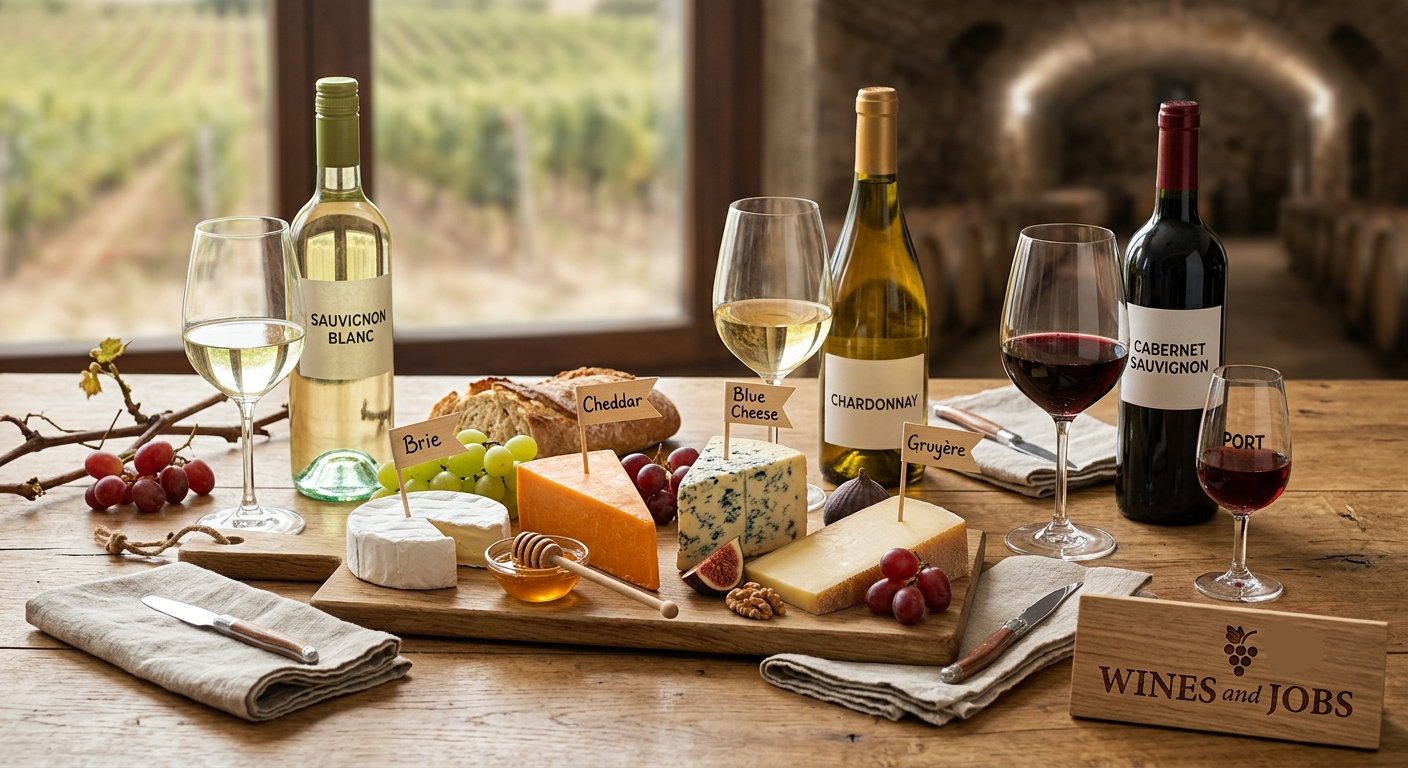
Pairing wine and cheese is a timeless culinary match, but getting the balance right boils down to dynamic mechanics: matching intensity, balancing fat with acidity, and letting sweetness offset saltiness.
When done right, the wine cuts through the richness of the cheese, while the fats and proteins in the cheese soften the tannins and acidity in the wine.
1. Fresh & Unripened Cheeses
- Profiles: Goat Cheese (Chèvre), Feta, Fresh Mozzarella, Ricotta.
- Characteristics: High moisture, bright acidity, creamy textures, and light, tangy flavors.
- The Wine Pairings:
- Sauvignon Blanc: A classic match for Chèvre. The high acidity and citrusy, herbaceous notes of a Sauvignon Blanc echo the tartness of fresh goat cheese without overpowering its delicate profile.
- Pinot Grigio / Prosecco: Crisp, dry white wines or zesty sparklers contrast the mild richness of fresh mozzarella and ricotta.
2. Soft & Bloomy Rind Cheeses
- Profiles: Brie, Camembert, Robiola.
- Characteristics: Rich, buttery, gooey interiors with earthy, mushroom-like rinds.
- The Wine Pairings:
- Chardonnay (Lightly Oaked or Un-oaked): The roundness of a cool-climate Chardonnay mirrors the luscious, buttery texture of Brie.
- Champagne / Traditional Method Sparkling: Bubbles and high acidity act as a palate cleanser, scrubbing the tongue of heavy butterfat after every bite.
- Pinot Noir: Low tannins and bright red fruit notes in a Pinot Noir complement the subtle earthy undertones of Camembert without creating a harsh metallic finish.
3. Semi-Firm & Aged Alpine Cheeses
- Profiles: Gruyère, Comté, Gouda, Fontina, Manchego.
- Characteristics: Nutty, slightly sweet, savory, and dense with balanced moisture.
- The Wine Pairings:
- Merlot: The smooth plum and black cherry flavors of Merlot integrate seamlessly with the caramelized notes of an aged Gouda.
- Dry Riesling: The stony minerality and bright fruitiness of an off-dry or dry Riesling bring out the delicate nuttiness of Alpine cheeses like Gruyère.
- Tempranillo / Garnacha: The medium tannins and savory character of a Rioja or Spanish Grenache cut through the sheep’s milk oiliness of a firm Manchego.
4. Hard & Aged Cheeses
- Profiles: Aged Cheddar, Parmigiano-Reggiano, Pecorino Romano.
- Characteristics: Crumbly, salty, low moisture, highly concentrated in flavor, and rich in tyrosine crystals.
- The Wine Pairings:
- Cabernet Sauvignon: Strong, tannic reds require fat and protein to bind with. A sharp, aged Cheddar tames the bold tannins of a Cabernet, unlocking deeper fruit flavors.
- Chianti Classico / Nebbiolo: High-tannin, high-acid Italian reds stand up effortlessly to the intense salinity and umami depth of Parmigiano-Reggiano or Pecorino.
5. Blue Cheeses
- Profiles: Roquefort, Gorgonzola, Stilton.
- Characteristics: Salty, pungent, sharp, creamy, and distinctively metallic or funky.
- The Wine Pairings:
- Tawny / Vintage Port: Pungent, salty cheeses pair best with sweet, fortified wines. The residual sugar in Port softens the pungent hit of blue mold, creating a dessert-like contrast.
- Sauternes or Late Harvest Riesling: Honeyed stone fruit, botrytis notes, and natural sweetness act as an ideal counterweight to a salty Roquefort or Gorgonzola.
Essential Pairing Guidelines
| Pairing Principle | Why It Works | Classic Example |
| Match Intensity | Prevents one element from overpowering the other. | Light Pinot Grigio + Mild Fresh Mozzarella |
| High Fat + High Acid | Acid cuts through dense fat to keep the palate clean. | Sauvignon Blanc + Soft Goat Cheese |
| Sweet + Salty | Sweetness balances high salt content and pungent aromas. | Port + Blue Stilton |
| Protein + Tannin | Cheese proteins soften harsh astringency in bold red wines. | Cabernet Sauvignon + Aged Cheddar |
Looking to explore career pathways, cellar opportunities, or industry talent across the global wine trade? Visit Wines and Jobs for wine industry recruitment, career resources, and professional insights.
Cheers !!!