
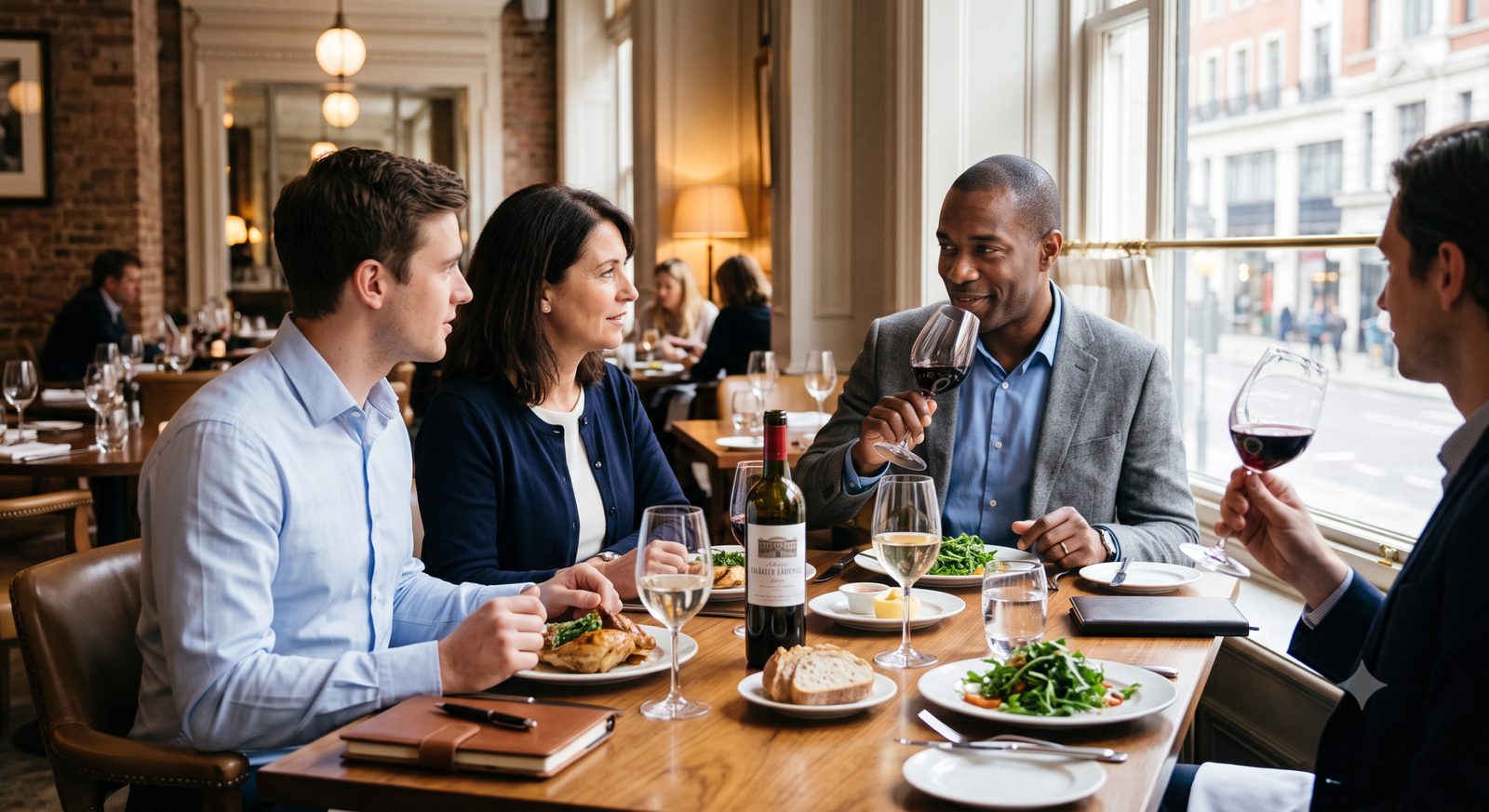
We’ve all been there: The server hands you a leather-bound wine list thicker than a phone book, and suddenly, the entire table goes quiet. Your boss or client looks over and says, “Why don’t you pick out something nice for us?”
Panic sets in. If you order the cheapest bottle, you look stingy. If you order the most expensive, you look like a spendthrift burning through the expense account. If you mispronounce a French region, you risk sounding like an amateur—but if you swirl, sniff, and lecture for ten minutes, you risk sounding insufferable.
Navigating a wine list during a professional meal doesn’t require a master sommelier certification. It requires strategy, confidence, and a touch of tact.
Here is your ultimate guide to selecting the perfect bottle at a business lunch or dinner—impressed clients included, snobbery excluded.
1. Do Your Reconnaissance Before You Arrive
The easiest way to remove pressure at the table is to eliminate the element of surprise.
- Check the Menu Online: Almost every restaurant posts its beverage list on its website. Take two minutes before heading out to scan the offerings.
- Spot Two Go-To Options: Identify one white and one red that sit comfortably in the mid-tier price range. Having a pre-selected backup eliminates panic scrolling when the pressure is on.
2. Read the Room (and the Table)
Before opening the wine list, observe what your clients are ordering. The food dictates the direction, but the client’s preferences take priority.
- Ask Soft, Lead-In Questions:“Are you leaning toward seafood or something heartier today?”“Are you in the mood for a red, or would you prefer something light and crisp?”
- Accommodate Non-Drinkers Quietly: Never make a big deal if someone opts out. Ensure sparklers, mocktails, or still water are offered with equal enthusiasm.
3. The Price Point Rule: Aim for the Middle
Pricing etiquette can feel like a minefield. Here is a simple framework to keep your expense report—and your guest—in check:
[ Lower 25% ]  -------->  Avoid (Can look like cutting corners)
[ Middle 50% ] -------->  SWEET SPOT (Great quality, smart value)
[ Top 25% ]    -------->  Save for major closing deals / client celebrations
- The Mid-Tier Rule: Stick to the 2nd or 3rd mark-up tier. This is usually where the sommelier hides high-value, incredible bottles from smaller producers.
- Avoid the “Second Cheapest” Trap: Restaurants know people avoid the absolute cheapest bottle, so they often place high-margin, low-quality options right above it. Aim squarely for the true middle.
4. Crowd-Pleasing Grape Varieties (Your Safe Harbors)
When ordering for a group with varied dishes, lean into versatile, food-friendly styles that rarely offend:
| Style | Safer Choice (Crowd-Pleasers) | What it Pairs With |
| Whites | Sauvignon Blanc (Sancerre / Marlborough) Crisp Pinot Grigio | Seafood, salads, poultry, goat cheese |
| Reds | Pinot Noir (Willamette Valley / Burgundy) Syrah / Rhone Blends | Salmon, duck, steaks, roasted vegetables |
| Sparkling | Prosecco / Cava / Champagne | Almost everything (great icebreaker) |
Pro Tip: Avoid overly oaky, heavy Chardonnays or massive, high-alcohol Cabernet Sauvignons unless you know for a fact your client specifically prefers them. High tannin or strong oak can overpower lighter dishes.
5. How to Interact with the Sommelier Like a Pro
Using the restaurant’s expert isn’t a sign of weakness—it’s a sign of confidence. The secret is knowing how to communicate your budget discreetly.
The Pointing Technique
Open the wine list, point to a specific bottle price with your finger, and say:
“We’re looking for a red that goes well with steak and salmon, somewhere in this style or price range. What do you recommend?”
The sommelier will immediately understand your price target without you having to announce an exact dollar amount out loud to your guests.
6. The Tasting Ritual: Keep It Quick
When the bottle arrives, the server will present the label and pour a small taste. Remember: This test is only to check if the wine is flawed (corked or oxidized), not whether you personally like it.
1.Verify the Label:
Check the bottle quickly to ensure it’s the correct vintage and producer you ordered.
2.Swirl and Smell Briefly:
Give the glass a single swirl and take a short sniff. If it smells like wet cardboard or moldy basement, it may be corked.
3.Take a Small Sip:
Confirm it tastes fresh, give a nod to the server, and say “That’s great, thank you.”
Keep the entire ritual under 15 seconds. Endless swirling, sniffing, and lecturing interrupts the conversational flow of the meeting—which is the main reason you’re there.
Conclusion
At the end of the day, a business lunch isn’t about proving you’re a wine expert. It’s about making your clients feel comfortable, valued, and well cared for. By keeping things simple, staying attentive to their preferences, and ordering with quiet confidence, you turn the beverage list from a point of stress into an asset for building better professional relationships.
As you continue to build your career and expand your professional network, remember that success often comes from mastering both business skills and social etiquette.
Ready to take the next step in your career? Explore exciting job opportunities, career resources, and industry insights at winesandjobs. Whether you’re looking for your dream role in the wine industry or aiming to grow your professional network, we’re here to help you uncork new opportunities.
Visit winesandjobs today and discover where your next career opportunity begins.
Cheers !!!