


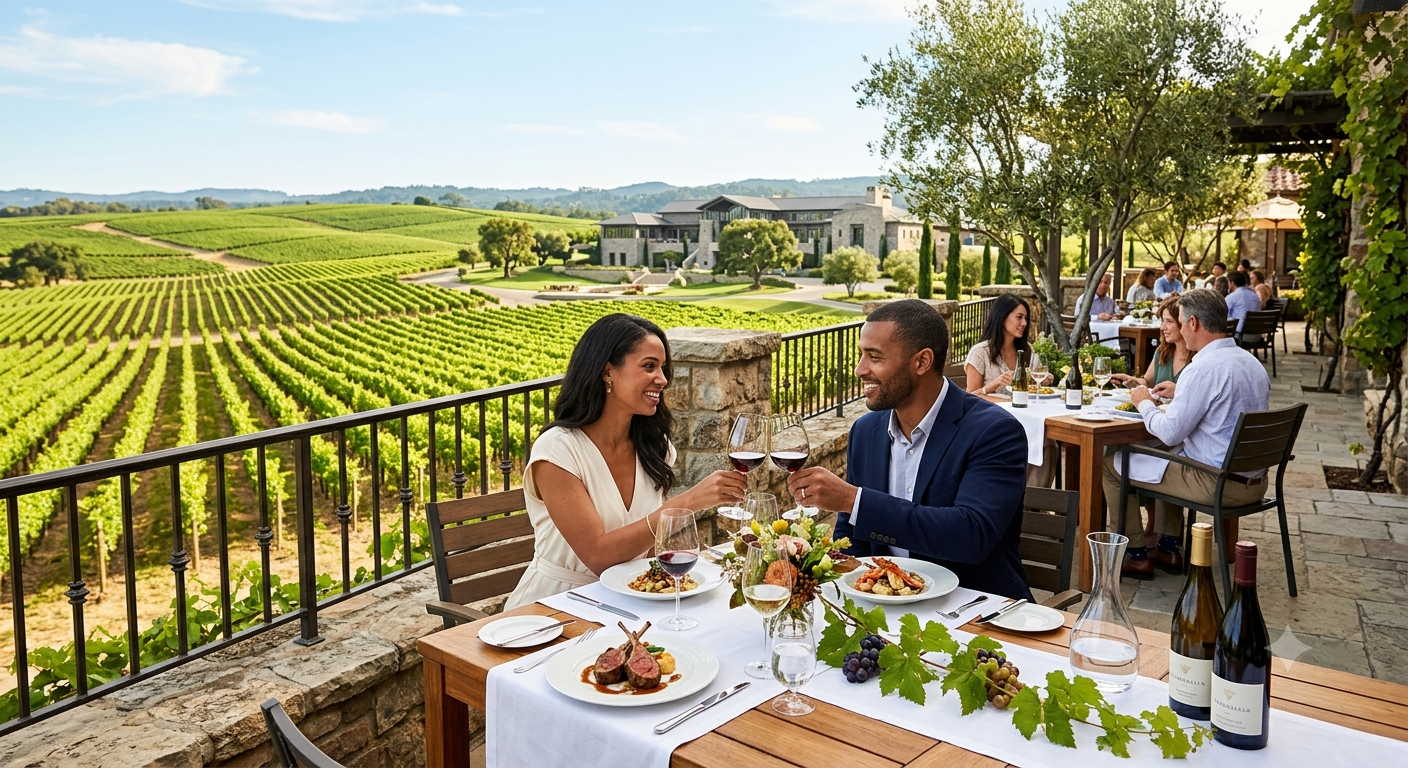
A truly exceptional winery restaurant does far more than satisfy hungry tasting-room visitors. At its best, it mirrors the estate itself: deeply rooted in terroir, obsessively focused on local produce, and determined to offer an authentic sense of place. Across the globe, pairing world-class winemaking with ambitious culinary programs creates destinations worth planning entire journeys around.
From high-altitude estate kitchens in the Andes to coastal sanctuaries in Australia and historic castles along the Rhine, here is a curated guide to the premier winery restaurants defining global wine tourism in 2026.
Argentina
Angélica Cocina Maestra (Bodega Catena Zapata, Mendoza)
At Catena Zapata’s iconic pyramid-shaped winery, Angélica Cocina Maestra structures its tasting menus around specific vineyard elevations and historic vintages. Set against the dramatic backdrop of the Andes, the kitchen reinterprets Argentine traditions, pairing dishes like calf sweetbreads with beets or local freshwater pejerrey fish with horseradish condiments alongside the estate’s world-renowned Malbecs and Chardonnays.
Riccitelli Bistró (Matías Riccitelli Wines, Mendoza)
Nestled among old vines in Las Compuertas—one of Mendoza’s highest and coolest sub-regions—Riccitelli Bistró centers its culinary identity around open-fire cooking and organic estate gardens. The rustic, open-air atmosphere pairs naturally with low-intervention winemaking and mountain-framed vineyard landscapes.
Savia Cocina (Casarena Bodega y Viñedos, Mendoza)
Overlooking nearly century-old vineyards in Luján de Cuyo, Savia Cocina epitomizes Mendoza’s relaxed, celebratory hospitality. Open-fire cooking, seasonal regional produce, and traditional Argentine comfort dishes are curated specifically for extended, leisurely outdoor lunches.
Australia & New Zealand
The Lane Vineyard Restaurant (The Lane Vineyard, Adelaide Hills, Australia)
Located just twenty minutes outside Adelaide, The Lane offers sweeping, elevated panoramas of the Onkaparinga Valley. The kitchen presents modern South Australian ingredients—such as local prawns with lemon myrtle and estate-raised lamb—matched seamlessly with cool-climate Syrah and Sauvignon Blanc.
Wills Domain (Wills Domain Winery, Margaret River, Australia)
A longtime anchor of Margaret River’s dining scene, Wills Domain sits above the Gunyulgup Valley. Modern Australian tasting menus showcase regional seafood, native bush ingredients like quandong and finger lime, and precision-crafted Cabernet Sauvignon and Chardonnay.
North America
Restaurant Pearl Morissette (Pearl Morissette Winery, Niagara Peninsula, Canada)
Pearl Morissette has evolved into one of North America’s most celebrated culinary destinations. Operating on a strict philosophy of hyper-regionality and low-intervention craft, the multi-course tasting menus highlight native Canadian forage, small-farm produce, and estate wines that capture the distinct microclimate of the Niagara Peninsula.
Old Vines Restaurant (Quails’ Gate Winery, Okanagan Valley, Canada)
With expansive views overlooking Okanagan Lake, Old Vines Restaurant crafts seasonal British Columbian cuisine—from local cured salmon to roasted lamb—tailored to complement the winery’s Pinot Noir, Chardonnay, and aromatic white varieties.
Europe
La Grand’Vigne (Château Smith Haut Lafitte, Pessac-Léognan, France)
Housed beneath an 18th-century greenhouse-inspired glass canopy, this two-Michelin-starred destination delivers precision French gastronomy. The culinary program emphasizes seasonal vegetable-driven tasting menus, designed to pair with the estate’s Grand Cru Classé Graves wines.
Chalk (Wiston Estate, Sussex, England)
Chalk brings a refined English approach to vineyard dining. Set within the rolling South Downs, the restaurant focuses on hyper-local game, fresh coastal seafood, and seasonal produce, designed specifically to accompany the estate’s award-winning English sparkling wines.
Restaurant Schlossschänke (Schloss Johannisberg, Rheingau, Germany)
Perched atop historical cellars, Schlossschänke serves traditional Rheingau cuisine tailored to highlight the full spectrum of Riesling—from bone-dry expressions to sweet Spätlese vintages—with sweeping views across the Rhine Valley.
Il Ristoro di Castello di Ama (Castello di Ama, Chianti, Italy)
Located within an 18th-century Tuscan villa, dining at Castello di Ama is an immersive cultural experience combining contemporary art installations, historic cellar heritage, and refined Chianti Classico pairings with classic Tuscan recipes.
Key Trends Driving the Wine & Hospitality Industry
Behind every world-class winery restaurant is an exceptional team of chefs, sommeliers, estate managers, and cellar staff. For industry leaders and job seekers alike, these top-tier destinations reveal pivotal shifts shaping modern wine careers and estate operations:
Hyper-Local Sourcing & Sustainability: Culinary programs are increasingly demanding talent skilled in farm-to-table integration, biodynamic practices, and low-waste kitchen operations.
Elevated Hospitality Career Paths: As tasting rooms evolve into world-class culinary centers, the demand for dual-trained hospitality professionals—conversant in both fine dining service and viticulture—continues to surge globally.
Low-Intervention Wine Pairings: Sommeliers and beverage directors are aligning menus more closely with low-intervention and natural winemaking styles, favoring freshness, bright acidity, and subtle wood influence.
Looking for your next career move in the wine industry? Whether you are a winemaker, sommelier, hospitality manager, or viticulturist, explore international opportunities and connect with top wine employers globally at Wines and Jobs (www.winesandjobs.com).
Cheers !!!