


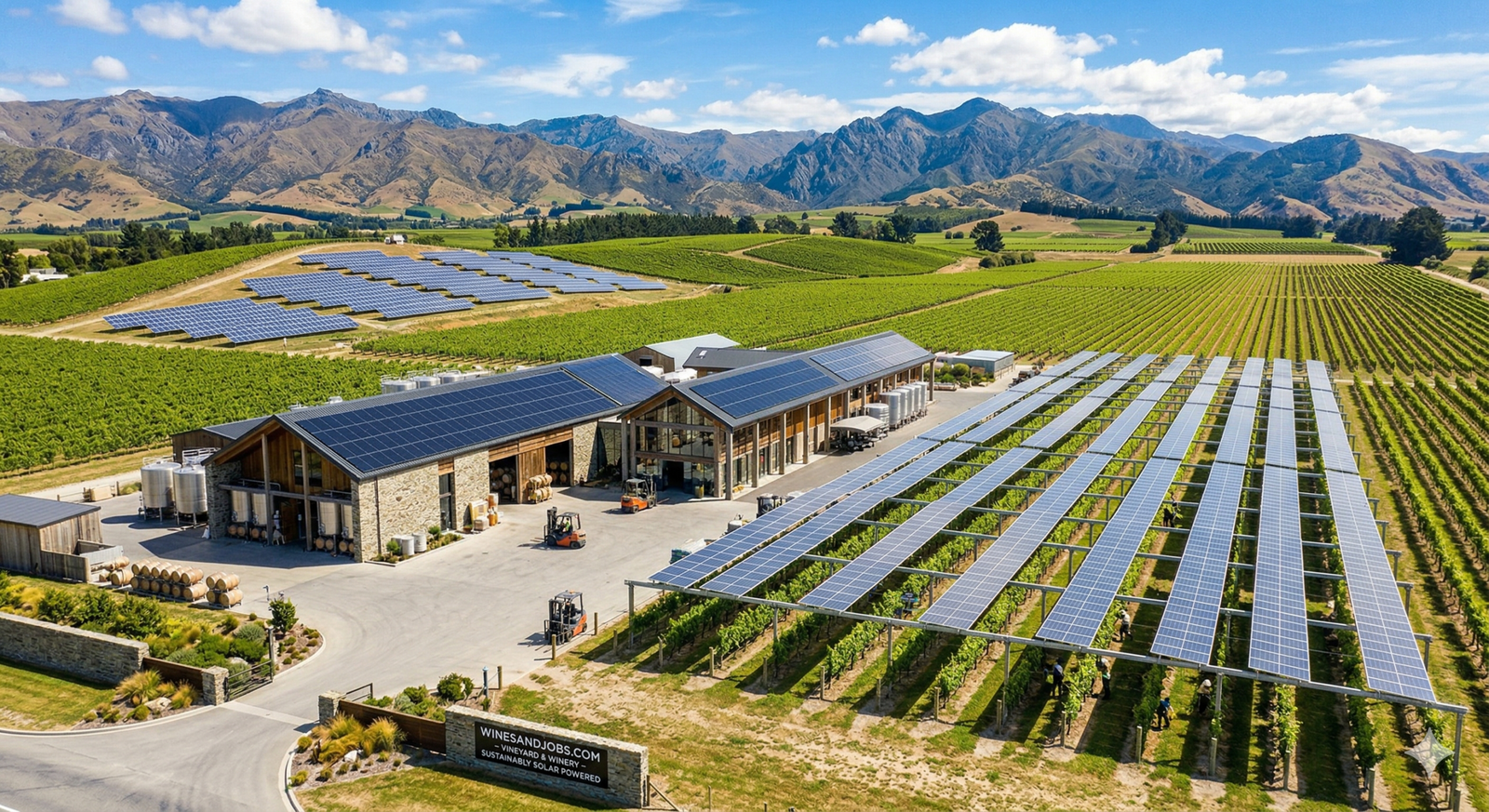
The wine industry has always been a dance with nature. But as the climate shifts and energy costs fluctuate, the world’s most prestigious vineyards are finding that the sun needs to do more than just ripen grapes—it needs to power the entire operation.
From the rolling hills of Tuscany to the valleys of Marlborough, wineries are undergoing a massive “energy terroir” shift. Here is why switching to solar isn’t just a trend, but a necessity for the survival of winemaking.
1. The Energy Intensity of a Single Bottle
It takes more than soil and water to produce a vintage. Modern winemaking is a high-energy endeavor. Consider the infrastructure required:
- Climate-Controlled Fermentation: Maintaining precise temperatures in massive stainless steel tanks.
- Cold Stabilization: Chilling wine to near-freezing temperatures to remove tartrates.
- Storage & Aging: Huge barrel rooms and caves require 24/7 humidity and temperature regulation.
- Bottling & Operations: High-speed lines and electric forklifts.
On average, a single bottle of wine can generate approximately 1.28kg of $CO_2$. For an industry that produces over 30 billion bottles annually, the collective carbon footprint is staggering. Solar energy allows wineries to decouple their production from fossil fuels.
2. Economic Resilience in a Volatile Market
Energy prices are famously unpredictable. By installing solar arrays, wineries are effectively “pre-buying” 25–30 years of electricity at a fixed cost.
- Rapid ROI: Many wineries report that systems pay for themselves in 5 to 7 years.
- Grid Independence: During peak summer months—exactly when cooling demands are highest—solar production is at its peak.
3. The Rise of “Agrivoltaics”
One of the biggest changes is the adoption of Agrivoltaics—the practice of installing solar panels directly over the vines.
- Heat Protection: Elevated, semi-transparent solar panels provide partial shade, slowing the ripening process and preserving the acidity needed for balanced wine.
- Water Conservation: Shading the vines reduces soil evaporation, allowing wineries to cut down on irrigation in drought-prone regions.
Shaping the Future of the Wine Workforce
As wineries transition to green technology, they need a new generation of talent—from sustainable vineyard managers to eco-conscious cellar hands. At Wines and Jobs, we are dedicated to connecting forward-thinking professionals with the estates leading this energy revolution.
If you are looking to build a career in a sustainable wine industry, or if you are a winery seeking experts to lead your green transition, explore our dedicated platforms:
- Winesandjobs.com Home: Your gateway to the global wine labor market.
- Wine Industry Jobs: Find your next role in sustainable viticulture and winemaking.
- Wine Industry Blog: Stay updated on the latest trends in technology, sustainability, and global wine news.
- Post a Job: For wineries looking to hire the best talent in the industry.
The Bottom Line
The transition to solar energy is a return to the roots of viticulture: relying on the sun to provide everything the vineyard needs. For wineries to survive the next century, they must stop viewing energy as an external utility and start viewing it as a resource they can harvest right alongside their grapes.
The future of wine isn’t just red or white—it’s green.
Cheers !!!