
In the modern wine world, the harvest never truly ends. For a select group of elite consultants and ambitious cellar hands, the conclusion of the Northern Hemisphere’s vintage in October is just a brief intermission before the Southern Hemisphere kicks off in February.
These are the “Flying Winemakers”—nomadic experts who spend their lives chasing an endless autumn, crossing the equator twice a year to lend their expertise to vineyards on opposite sides of the globe. In 2026, this role has evolved from a niche adventure into a critical pillar of the global wine economy.
What Exactly is a Flying Winemaker?
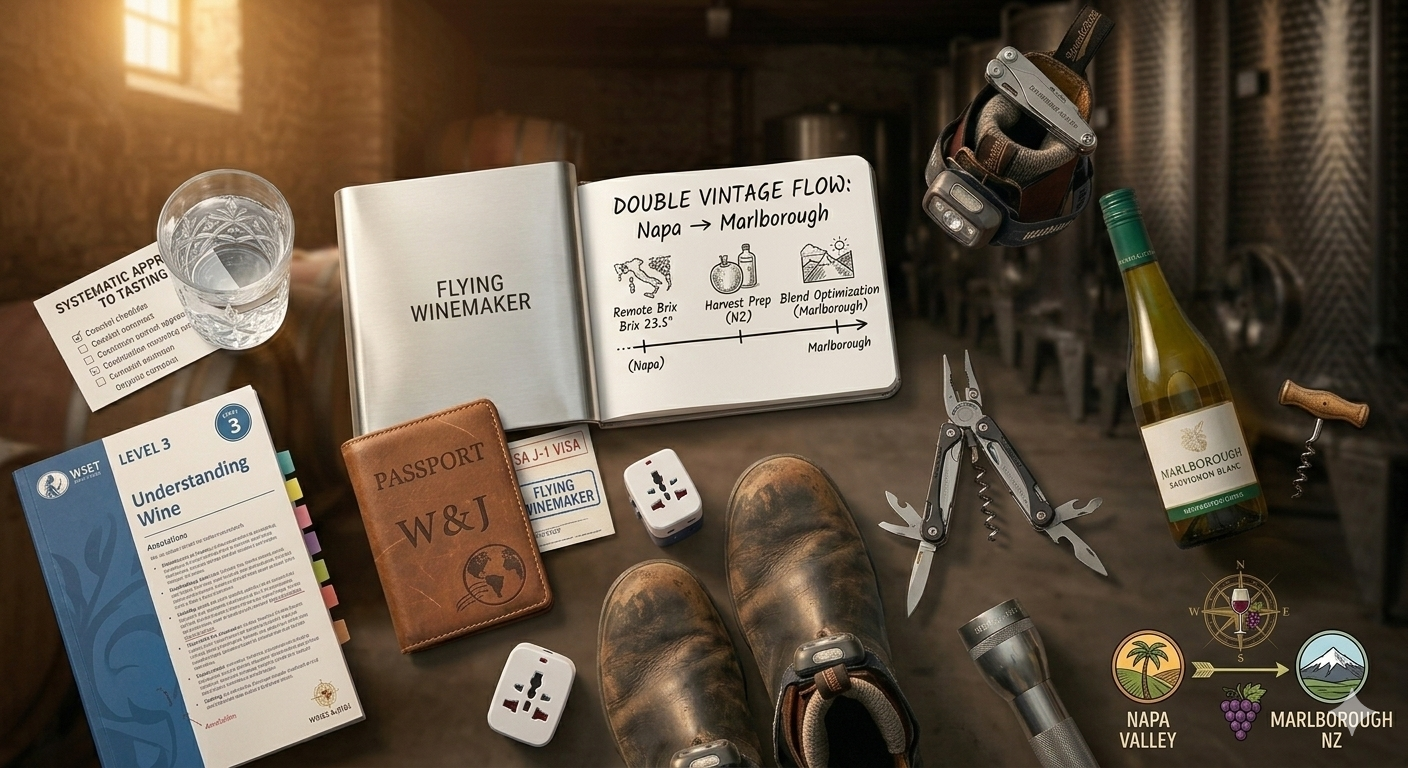
The term was coined in the late 1980s, but the 2020s have seen the profession go high-tech. A flying winemaker is a consultant or a highly skilled technician who works a “Double Vintage.”
By “moonlighting” in the opposite hemisphere during their home region’s off-season, they gain twice the experience in half the time. While early flying winemakers were often Australians heading to the South of France to modernize cooperatives, today’s experts come from every major wine region, bringing a “global palate” to local terroirs.
How They Manage the “Endless Harvest”
Managing vineyards 10,000 miles apart isn’t just about frequent flyer miles; it’s an “orchestra of moving parts” that requires precision and a very specific set of tools.
1. The Power of Remote Viticulture
In 2026, a flying winemaker doesn’t always need to be in the rows to know what’s happening.
- The Tech: They use data-driven tools like satellite imaging and vine-mounted sensors to monitor soil moisture and grape sugar levels ($Brix$) from their smartphones.
- The Benefit: This allows them to manage “pre-harvest” strategies in New Zealand while they are still finishing up ferments in Napa.
2. The Global Transfer of Techniques
Flying winemakers act like pollinators, carrying innovations from one region to another.
- Modern Hygiene: One of the greatest contributions of the “Flying” movement has been the global standardization of cellar hygiene and temperature-controlled fermentation.
- Style Fusion: They might bring the “reductive” (fresh, fruit-driven) winemaking techniques of Marlborough to the traditional regions of Portugal, or vice versa.
3. Managing the Physical Toll
Working two harvests a year means 12–14 hour days for nearly six months of the year.
- The Survival Kit: They rely on heavy-duty waterproof gear, high-end flashlights for night picks, and a rigorous personal health routine to avoid burnout.
Notable Industry Leaders in 2026
If you’re looking for inspiration, these are the names currently defining the “Flying” lifestyle:
| Name | Origins | Key Global Projects |
| Michel Rolland | France | Advises over 100 wineries in 13+ countries. |
| Alberto Antonini | Italy | A pioneer in bringing Italian elegance to Argentinian Malbec. |
| Eddie McDougall | Australia/HK | Founder of The Flying Winemaker, producing wines from Victoria to Ningxia, China. |
| Nova Cadamatre, MW | USA | Known for managing projects between the Finger Lakes and California, with a focus on sustainability. |
The Challenges: Terroir vs. Technique
The rise of the flying winemaker isn’t without controversy. Some critics argue that this nomadic approach can lead to “International Style”—wines that taste the same regardless of where they are grown because the winemaker’s signature style overrides the local soil and history.
However, the 2026 generation of consultants, like the Derenoncourt team, is pushing back. They focus on “Vins de Terroir,” using their global experience not to change the wine, but to better interpret what the unique local soil is trying to say.
🍷 Published on Wines and Jobs
Connecting the global wine community through insight, expertise, and opportunity.
The demand for “Flying” talent has never been higher. Wineries are looking for people who can adapt quickly to new climates and technologies. Are you ready to take your career to the next hemisphere?
- Find Your Next Double Vintage: Browse International Harvest Jobs
- Career Pathing: Join our community at www.winesandjobs.com to learn how to land your first “Flying” consultant role.