


When you look at a vineyard, you likely see wine or snack-ready table grapes. But for the modern winemaker and innovator, a grape is more than just a piece of fruit—it’s a high-performance raw material.
From the luxury oils in your skincare routine to the bio-fuels powering farms, grapes are one of the most versatile crops on the planet. Here is a look at the surprising spectrum of products we can make from every part of the vine.
1. Culinary & Everyday Staples
Beyond the wine glass and the fruit bowl, grapes are the foundation of several pantry must-haves:
- Juice & Concentrates: While Concord grapes are the classic choice for purple juice, many “white” grape juices are actually made from varieties like Sultana or Niagara.
- Vinegars: Balsamic vinegar (made from Trebbiano grape must), Red/White Wine vinegar, and even Verjuice (unripe grape juice used as a sharp acidic alternative to lemon juice).
- Dried Fruit: Raisins, currants, and sultanas are all distinct varieties of dried grapes, each with different sugar levels and textures.
- Grape Seed Oil: Valued for its high smoke point (216°C), it’s a favorite for searing and sautéing without altering the flavor of the food.
2. High-Performance Skincare (Vinotherapy)
Grapes are packed with polyphenols and resveratrol, two of nature’s most powerful antioxidants. The “waste” from winemaking is often upcycled into high-end beauty products:
- Face Oils & Serums: Grape seed oil is “non-comedogenic” (it won’t clog pores), making it ideal for acne-prone or sensitive skin.
- Anti-Aging Creams: Resveratrol, found primarily in grape skins, is studied for its ability to fight oxidative stress and boost collagen production.
- Exfoliants: Crushed grape seeds are used as a natural, biodegradable alternative to plastic microbeads in body scrubs.
3. Health & Nutraceuticals
The compounds that protect the grape from UV rays and pests also offer benefits to human health:
- Grape Seed Extract (GSE): Often sold in capsule form, GSE is used to support cardiovascular health and reduce inflammation.
- Natural Food Colorants: Enocyanin is a natural red-purple pigment extracted from grape skins, used to color everything from yogurts to soft drinks without synthetic dyes (look for E163 on labels).
- Grape Skin Flour: Dried and ground pomace (the leftover skins and seeds) is increasingly used as a gluten-free, fiber-rich additive in breads and pastas.
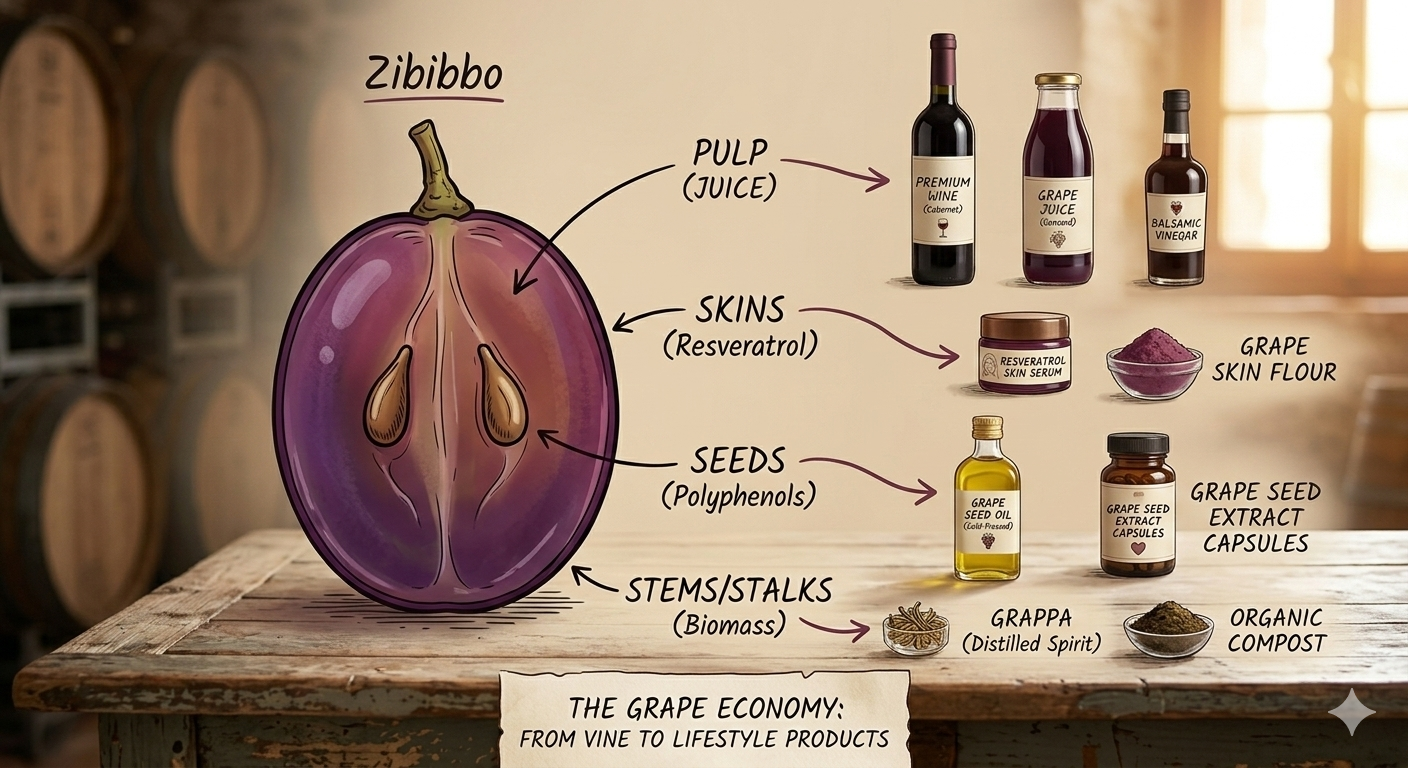
Anatomy of a Grape: What goes where?
| Part of the Grape | Primary Uses | Key Benefit |
| Pulp (Juice) | Wine, Juice, Vinegar, Jams | Natural sugars and acids |
| Skins | Resveratrol, Natural Dyes, Animal Feed | High in antioxidants & fiber |
| Seeds | Culinary Oil, Skincare Serums, GSE | High in Vitamin E & Omega-6 |
| Stems/Stalks | Grappa (distillation), Fertilizer, Biogas | Structural biomass |
4. Sustainability & Industrial Innovation
Winemakers are increasingly finding ways to ensure “Zero Waste” harvests:
- Biogas & Biofuels: Several wineries in regions like Australia and California now sell their grape pomace to companies that convert the waste into renewable energy.
- Animal Feed: Dried grape marc is a nutritious supplement for livestock, often used in sustainable farming loops.
- Grappa & Marc Brandy: In Italy and France, the “leftovers” aren’t thrown away; they are distilled into potent spirits like Grappa or Marc de Bourgogne.
Fun Fact: It takes roughly 1 ton of grapes to produce just 1 liter of grape seed oil. This is why pure, cold-pressed grape seed oil is often considered a luxury item!
🍷 Published on Wines and Jobs
Connecting the global wine community through insight, expertise, and opportunity.
The diversification of grape products is opening up new career paths in food science, sustainable energy, and cosmetic chemistry. Whether you’re a viticulturist growing the crop or a chemist refining the extract, the “grape economy” is larger than ever.
- Find Your Next Role: Browse Wine & Ag-Tech Jobs
- Stay Informed: Join our community of wine professionals at www.winesandjobs.com.
Cheers !!!