


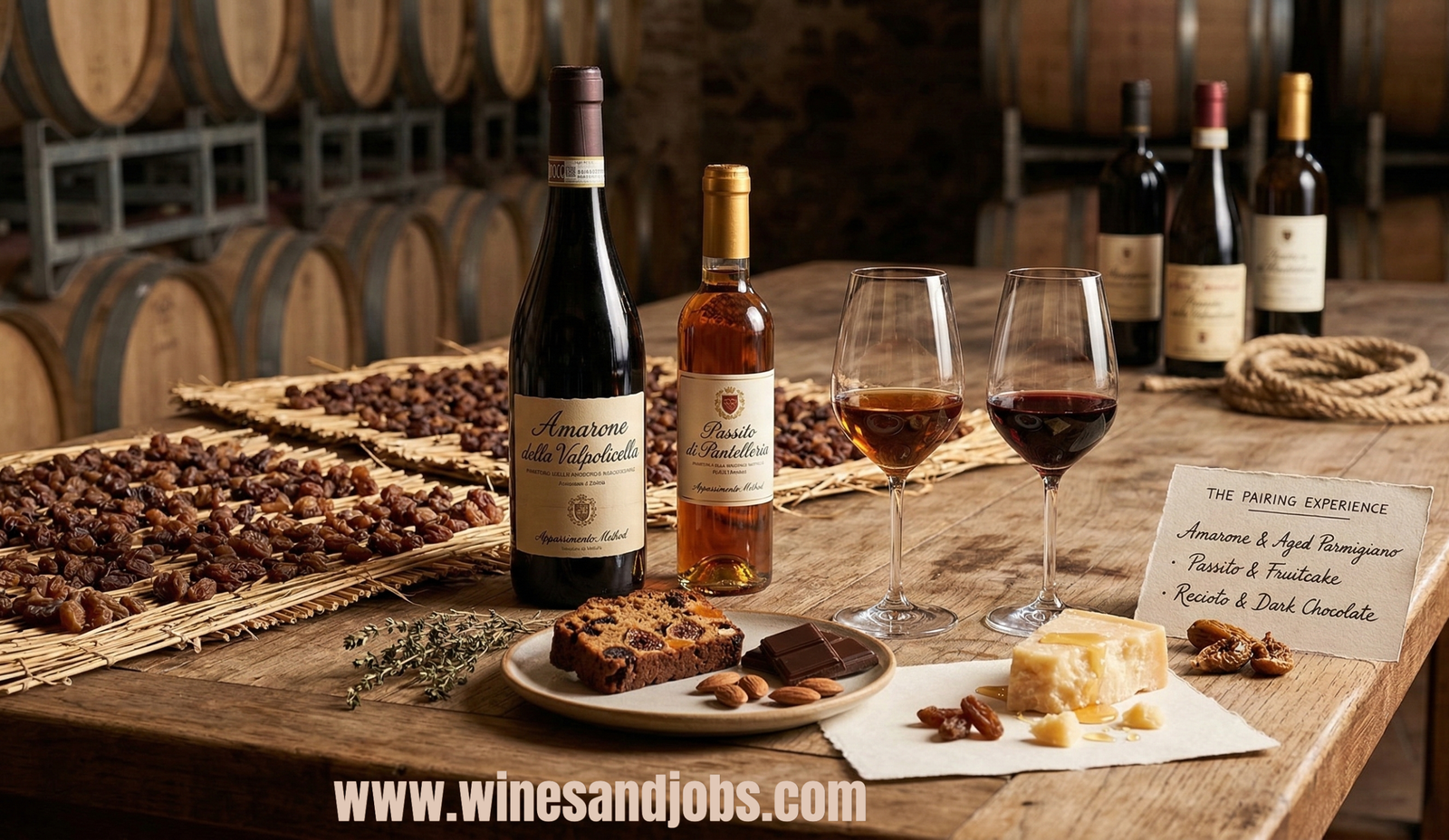
If you think wine only comes from fresh, juicy grapes plucked straight from the vine, you’re missing out on one of the ancient world’s most concentrated secrets. Raisin wines—often called “Straw Wines” or Passito—are made from grapes that have been dried out until they resemble raisins before they are ever pressed.
The result? A liquid that is syrupy, intense, and packed with enough flavor to make a standard glass of Cabernet feel like water.
Why on Earth Would a Winery Dry Their Grapes?
It seems counterintuitive. Why take a perfectly good grape and shrink it? For winemakers, the “raisining” process (technically called appassimento) is all about concentration.
- Flavor Intensity: As water evaporates, everything else stays behind. The sugars, acids, and aromatics become incredibly dense, leading to notes of fig, date, honey, and dark chocolate.
- Higher Alcohol: More sugar means more “food” for yeast. This allows these wines to naturally reach higher alcohol levels (often 15%–17% ABV) without being fortified like Port.
- Texture: These wines have a silky, viscous “mouthfeel” that coats the palate in a way fresh grape wine simply cannot.
- Tradition & Survival: Historically, drying grapes was a way to preserve them and ensure fermentation could happen slowly over the cold winter months.
Where the Magic Happens (Main Regions)
While raisin wines are made globally, a few regions have turned it into a high-art form:
1. Italy (The Heartland of Passito)
Italy is the undisputed king of this style. In the Veneto region, they make Amarone della Valpolicella, one of the world’s few dry red wines made from dried grapes. For something sweet, they produce Recioto. In Tuscany, you’ll find Vin Santo, often served with biscotti for dipping.
2. Greece (The Ancient Origin)
The island of Santorini is famous for Vinsanto. Grapes are laid out on volcanic rocks under the scorching sun for 12–14 days. It is dark, salty, and sweet—a direct descendant of the wines drunk by ancient Greeks.
3. France (Vin de Paille)
In the Jura region, they make “Straw Wine” (Vin de Paille). Traditionally, grapes were dried on literal straw mats inside ventilated barns for months before being pressed.
4. South Africa & Austria
South Africa’s Swartland is gaining fame for high-end Chenin Blanc straw wines, while Austria produces Strohwein, a spicy, concentrated treat.
Wineries to Look For
If you want to taste the best of this style, look for these legendary producers:
| Region | Famous Winery Names | Wine Style |
| Veneto, Italy | Allegrini, Tommasi, Masi, Quintarelli | Amarone / Recioto |
| Santorini, Greece | Estate Argyros, Domaine Sigalas | Vinsanto |
| Tuscany, Italy | Avignonesi, Felsina, Antinori | Vin Santo |
| Jura, France | Domaine Rolet, Jean-Louis Tissot | Vin de Paille |
| South Africa | Mullineux & Leeu Family Wines | Straw Wine |
How to Drink It
Because these wines are so intense, a little goes a long way.
- Glassware: Use a smaller dessert wine glass.
- Pairing: Pair red versions (like Amarone) with braised meats or aged blue cheese. Pair sweet versions with dark chocolate, nuts, or simply as a “meditation wine” at the end of a meal.
Cheers !!!