


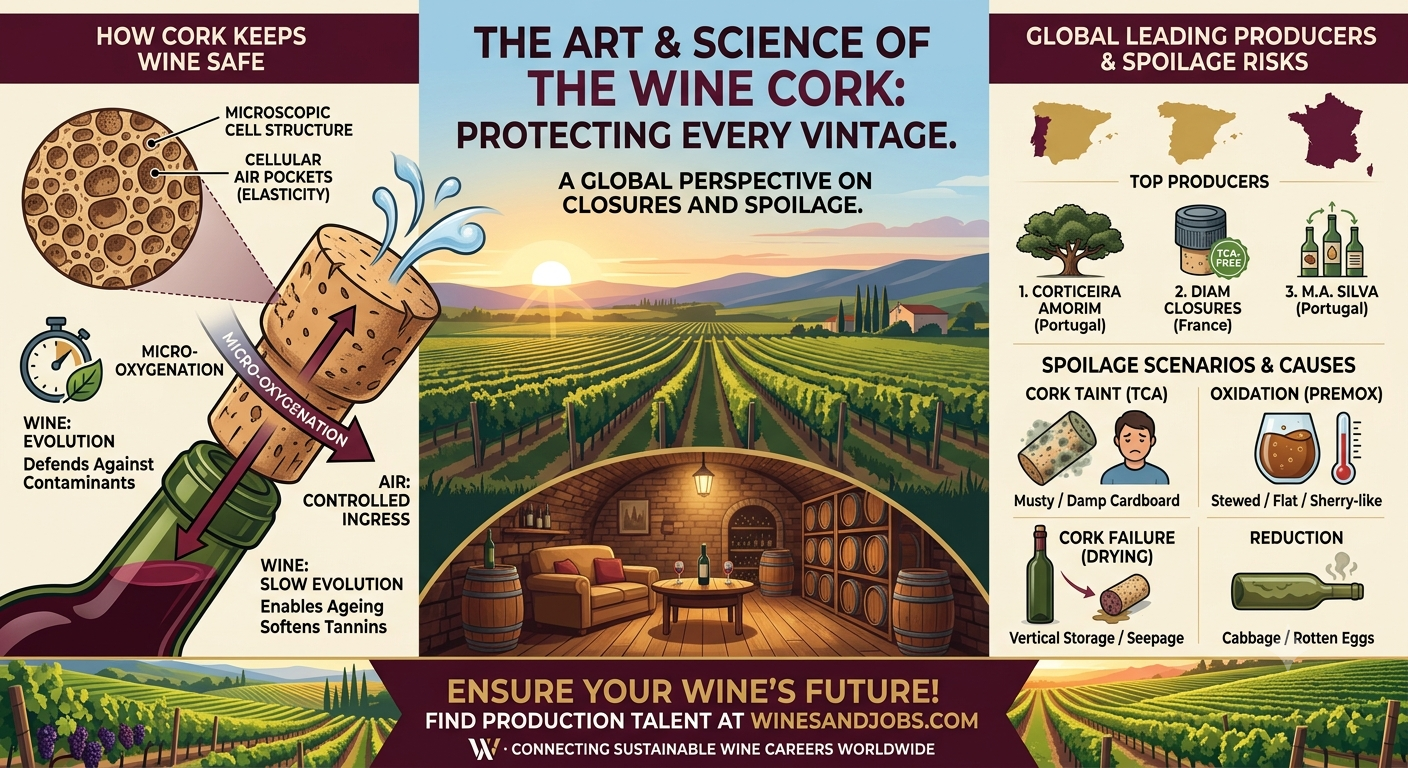
The humble wine cork has been the gold standard for sealing bottles for over 350 years. Beyond serving as a simple stopper, a high-quality cork acts as a living membrane—protecting the wine while managing its evolution in the bottle.
How Cork Keeps Wine Safe: Micro-Oxygenation
A natural cork is composed of millions of microscopic, air-filled cells that make it light, elastic, and impervious to liquids.
Physical Seal: When compressed into a bottle neck, the cork expands against the glass, creating an airtight barrier that prevents wine leakage and defends against environmental contaminants.
Controlled Micro-Oxygenation: Wine needs tiny, controlled amounts of oxygen to age gracefully. Natural cork allows a minuscule amount of oxygen (roughly 1 milligram per year) to pass into the bottle. This slow exchange helps soften harsh tannins, stabilize color, and unlock complex secondary aromas over time without oxidizing the wine.
The World’s Top Wine Cork Producers
The cork industry relies heavily on cork oak forests (Quercus suber) located predominantly in the Mediterranean basin. A few major producers dominate the global market through quality control and technology:
Corticeira Amorim (Portugal): The undisputed global leader in the cork industry, producing billions of natural and technical cork closures annually. Amorim invests heavily in technology to eradicate TCA (cork taint).
DIAM Closures (France): Famous for revolutionizing technical corks. DIAM uses a patented supercritical CO_2 extraction process to wash cork particles, guaranteeing 100% TCA-free micro-agglomerated corks with customizable oxygen transfer rates.
M.A. Silva (Portugal): A top-tier manufacturer known for vertical integration and strict quality control protocols across natural cork production.
Rich Xiberta (Spain): Operating since 1871, this Spanish multinational supplies natural, technical, and sparkling wine corks to wineries globally.
How Wine Can Still Get Spoiled Under Cork
While cork is an ideal closure, it is not infallible. Here are the primary ways a cork-sealed wine can spoil:
| Spoilage Mechanism | Cause | Flavor & Sensory Impact |
| Cork Taint (TCA) | 2,4,6-Trichloroanisole formed by airborne fungi reacting with chlorophenols in cork | Strips fruit aromas; causes a damp cardboard, wet dog, or musty basement smell. |
| Premature Oxidation (Premox) | Dry cork, poor seal, or loose elasticity allowing excessive oxygen ingress | Wine turns brown, loses freshness, and tastes flat, stewed, or sherry-like. |
| Cork Drying & Failure | Storing bottles vertically causes the cork to dry out and shrink | Accelerates oxygen leakage and causes liquid to seep past the seal. |
| Reduction (Too Tight Seal) | Technical/synthetic closures with zero oxygen ingress | Produces stink compounds like hydrogen sulfide (H_2S), smelling of cabbage or rotten eggs. |
Protecting Every Bottle with the Right Talent
Whether running a cork manufacturing plant, managing cellar hygiene to prevent TCA contamination, or selecting the ideal closure for an age-worthy vintage, bottling operations require qualified expertise.
To hire experienced enologists, production managers, and quality assurance specialists—or to find your next career step in the global wine sector—visit WinesAndJobs.com, the dedicated platform connecting wine professionals and employers worldwide.
Cheers !!!