


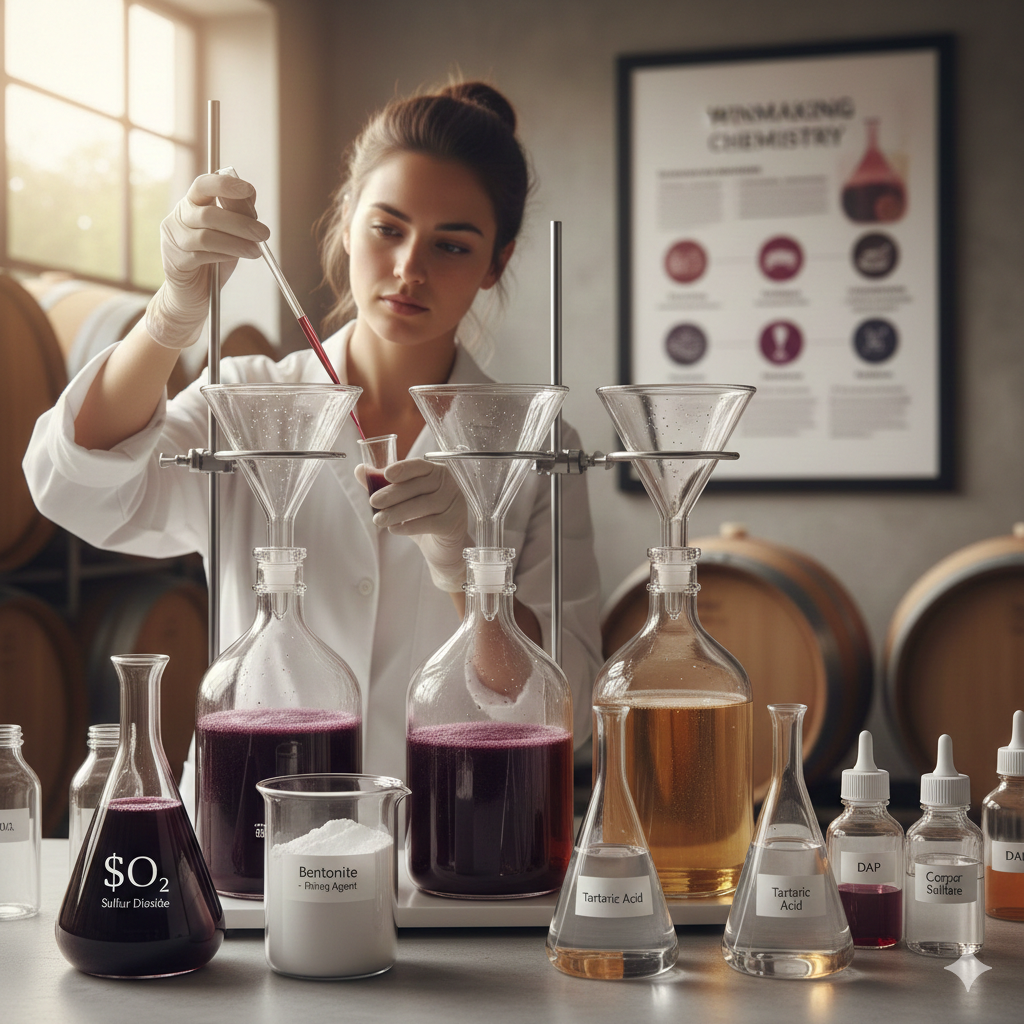
When you swirl a glass of Cabernet or Chardonnay, you’re looking at a complex chemical soup. While the soul of wine is grape juice and patience, the “science” of wine—oenology—often involves a toolkit of specific chemicals to ensure the wine doesn’t turn into vinegar or look like swamp water.
Here is a deep dive into the most common chemicals used in winemaking and why they matter.
1. The Great Protector: Sulfur Dioxide (SO_2)
If there is one “king” of wine chemicals, it’s sulfur. You’ll see “Contains Sulfites” on almost every bottle.
- What it does: It acts as both an antioxidant (preventing the wine from browning like a sliced apple) and an antimicrobial agent (killing off wild bacteria and rogue yeasts that could spoil the flavor).
- The Nuance: While it’s often blamed for “wine headaches,” most experts point to histamines or tannins instead. Fun fact: Dried apricots usually contain about ten times more sulfites than a bottle of wine.
2. The Clarity Crew: Fining Agents
Freshly fermented wine is cloudy, filled with microscopic bits of grape skin, dead yeast (lees), and proteins. To get that crystal-clear polish, winemakers use “fining agents” that act like magnets.
| Agent | Source | Best For… |
| Bentonite | Volcanic Clay | Removing proteins that cause haze in white wines. |
| Isinglass | Fish Bladders | Giving white wines a brilliant, “polished” shine. |
| Egg Whites | Albumen | Softening harsh tannins in premium red wines. |
| Casein | Milk Protein | Removing “off” colors and bitterness in whites and sherries. |
Note for Vegans: Because many traditional fining agents are animal-derived, many modern winemakers are switching to bentonite (clay) or pea proteins to keep their wines vegan-friendly.
3. The Balancers: Acids and De-Acidifiers
Wine is all about the balance between sugar and acid. If the growing season was too hot, the grapes might lack “zing.” If it was too cold, they might be painfully tart.
- Tartaric Acid: The primary acid found in grapes. Winemakers add this to “flabby” wines to give them structure and longevity.
- Calcium Carbonate: Essentially chalk. It’s added to over-acidic wines to neutralize some of the tartness—a process common in cooler climates.
4. The Fuel: Yeast Nutrients
Yeast are the hard workers of the cellar, but they can’t live on sugar alone. They need nitrogen and vitamins to finish the job.
- Diammonium Phosphate (DAP): Think of this as “Gatorade for yeast.” It provides a quick burst of nitrogen to prevent the fermentation from getting “stuck.”
- Thiamine (Vitamin B1): Helps the yeast stay healthy in high-alcohol environments so they don’t produce “rotten egg” smells (hydrogen sulfide).
5. The Finishers: Stabilizers
Once the wine is bottled, the winemaker wants it to stay exactly as it is.
- Potassium Sorbate: Used primarily in sweet wines. It doesn’t kill yeast, but it “sterilizes” them so they can’t reproduce. This prevents the wine from re-fermenting inside the bottle (which can lead to exploding corks!).
- Copper Sulfate: Used in tiny amounts to remove “reduced” odors—those pesky smells of burnt rubber or cabbage that can develop during fermentation.
Is “Chemical-Free” Wine a Thing?
Technically, no. Wine itself is a collection of chemical compounds like ethanol, glycerol, and phenols. However, the “Natural Wine” movement seeks to minimize added chemicals, often using zero $SO_2$ and skipping the fining/filtering process entirely. This results in a cloudier, more “alive” (and sometimes unpredictable) bottle.
Whether a wine is “manipulated” with a long list of additives or made with a hands-off approach, these chemicals are the tools that allow winemakers to express the terroir of the vineyard without the wine spoiling before it ever reaches your table.
Cheers !!!
Read more about blogs: https://winesandjobs.com/blog/
Looking for a Job: https://winesandjobs.com/jobs-listing-home/