

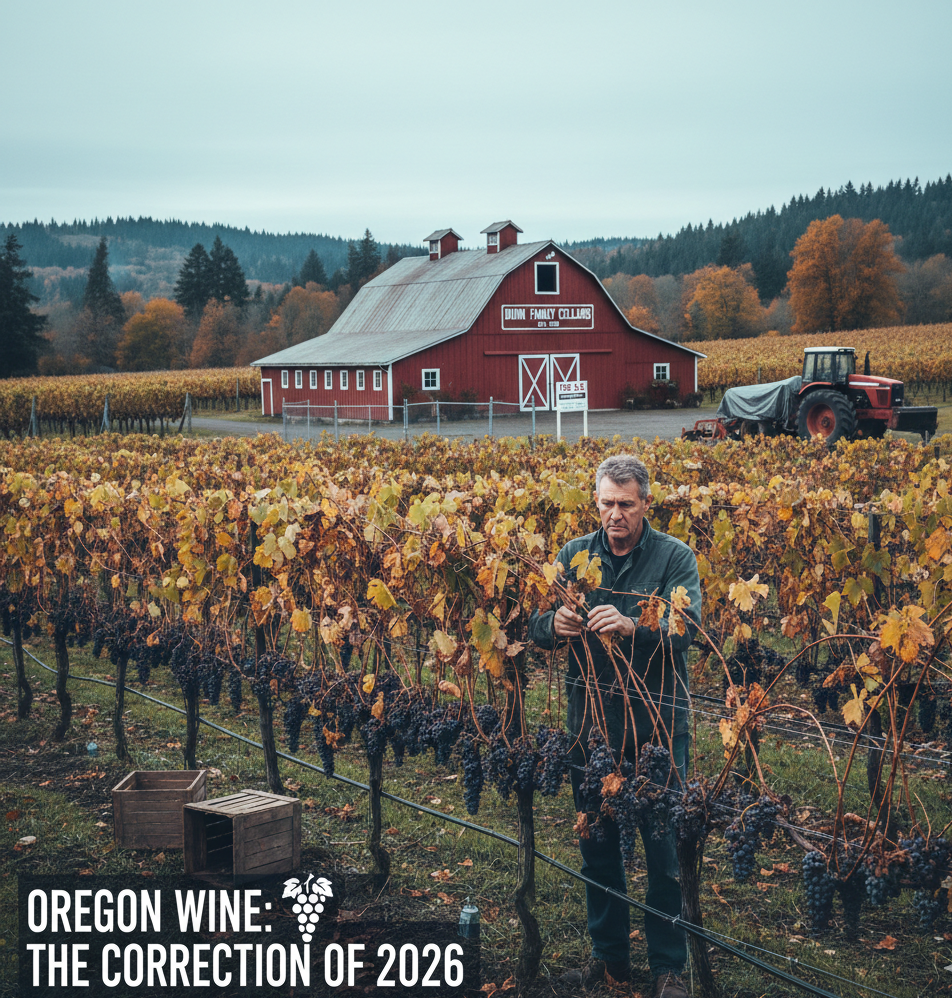
While the South Island of New Zealand is basking in the glow of global demand, the story across the Pacific in Oregon is one of a “great correction.”
Oregon, specifically the Willamette Valley, has long been the darling of American Pinot Noir. However, in 2026, the industry is facing a perfect storm of climate shifts, cooling consumer demand, and economic headwinds. Here is a look at why some of Oregon’s most beloved wineries are currently in a fight for survival.
The Oregon Wine Board recently reported a 6% decline in the number of bonded wineries year-over-year. For a state that built its reputation on boutique, family-run estates, this contraction is a significant wake-up call.
Why the Struggle?
- The Climate Paradox: In 2025/2026, many vineyards faced a “compact” harvest. Extreme heat pushed picking dates earlier than ever (some sparkling grapes were harvested in August), forcing winemakers to manage fermentation in triple-digit temperatures. This makes the delicate, cool-climate Pinot Noir—Oregon’s signature—increasingly difficult and expensive to produce.
- The “Sober-Curious” Generation: Gen Z and Millennials are drinking less alcohol than their predecessors. Traditional $60+ bottles of Pinot are becoming a harder sell to a generation that prioritizes wellness and “mindful drinking.”
- Oversupply & Distribution Crises: A major alcohol distributor (RNDC) recently exited the West Coast, leaving many small wineries without a way to get their bottles onto shop shelves. Without a distributor, small wineries are forced to rely 100% on tasting room sales—but foot traffic is down across the valley.
Who Is Under Pressure?
While many wineries are private and don’t disclose financial “struggles” until they close, several trends and news stories highlight where the pressure is highest:
1. The Small Boutique Estates
Wineries producing under 5,000 cases are the most vulnerable. Without “inherited infrastructure” (as noted by leaders at Soter Vineyards), these businesses face soaring costs for labor and glass. Many are being forced to choose between a “significant discount” sale to a larger conglomerate or closing their doors entirely.
2. Vineyards Without Contracts
Currently, the most “at-risk” segment of the industry isn’t just the wineries, but the independent growers. Vineyard owners without long-term fruit contracts are seeing valuations plummet. With an oversupply of grapes in the market, some are being forced to leave fruit on the vine because it costs more to harvest than it’s worth.
3. Iconic Labels Seeking “Horsepower”
Even the giants aren’t immune. Willamette Valley Vineyards, a titan of the region, recently announced a major leadership shakeup, separating the CEO and President roles to bring in “more horsepower” to navigate a rapidly changing market. When the biggest players are restructuring, it’s a sign that the old ways of selling wine are no longer working.
The “Survival” Strategy: How They Are Pivoting
The wineries that will survive are those willing to “disrupt their own DNA,” as Gary Mortensen of Stoller Wine Group recently put it. Look out for:
- Alternative Varieties: Wineries like Limited Addition are hedging their bets with warmer-climate grapes like Gamay and Cabernet Franc.
- Beyond the Bottle: Expect to see more high-quality canned wines, “Piquette” (a lower-alcohol wine spritzer), and even fruit-flavored wines to appeal to younger palates.
- Experience Over Transaction: Tasting rooms are shifting from “pour and pay” to immersive farm-to-table dinners and regenerative agriculture tours.
The Verdict: The Oregon wine industry isn’t dying, but it is thinning out. The “Gold Rush” era is over, replaced by a period where only the most innovative and financially disciplined will remain.
Cheers !!!