


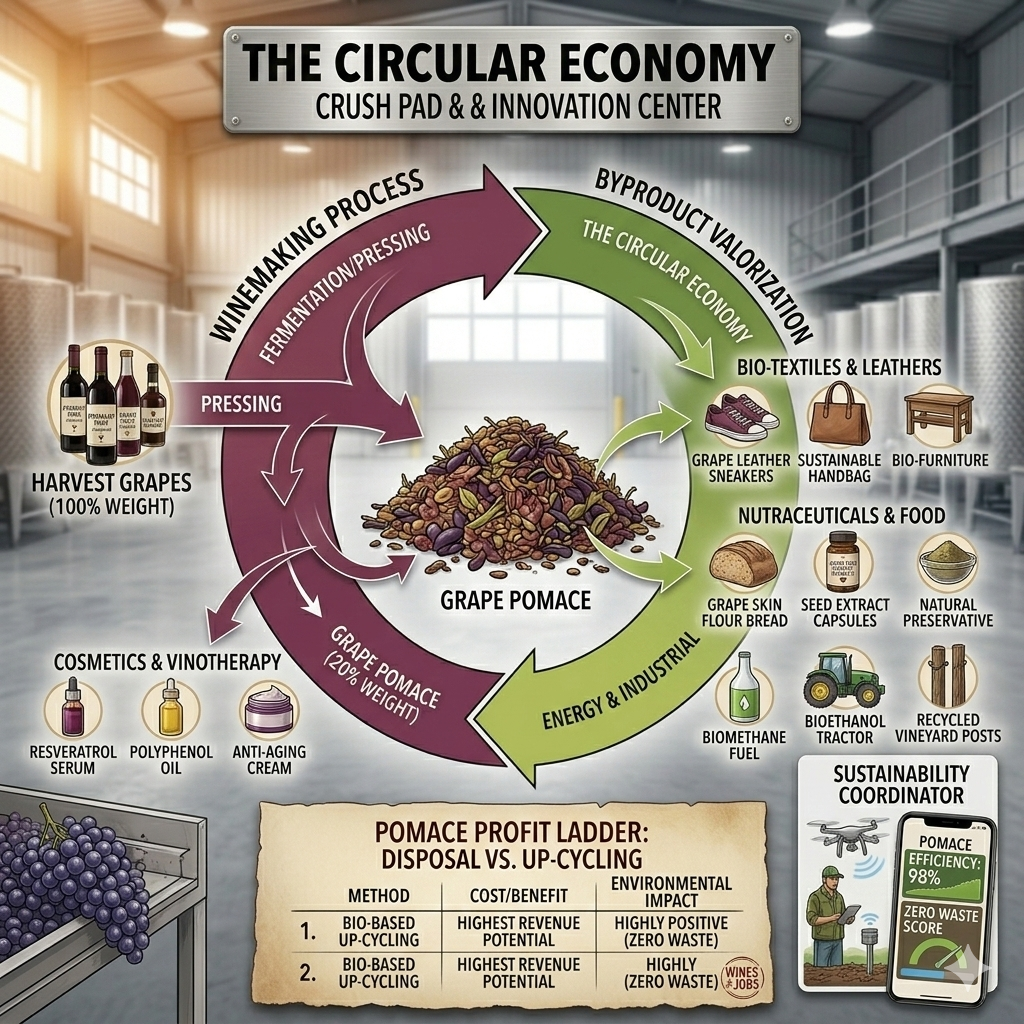
In the traditional winemaking model, harvest ends when the juice is tucked away in tanks and barrels. What remains—the mountain of skins, seeds, and stems known as pomace—was historically treated as waste, destined for the compost heap or a landfill.
But in 2026, the mindset has shifted. The global “fruit pomace” market is now valued at nearly $3.92 billion, and forward-thinking wineries are treating their leftovers not as a disposal problem, but as a secondary revenue stream. This is the Circular Economy in action: a closed-loop system where “waste” from one process becomes the high-value “raw material” for another.
The Anatomy of Value: What’s Inside the Pomace?
To understand why pomace is profitable, you have to look at its chemistry. After the grapes are pressed, up to 20% of the fruit’s total weight remains in the pomace, still packed with bioactive compounds.
- Skins: Rich in anthocyanins (natural dyes) and resveratrol (anti-aging).
- Seeds: Packed with polyphenols and high-quality oils.
- Stems: High in lignin and cellulose, perfect for structural materials.
1. From Vineyard to Vanity: The Cosmetics Boom
The beauty industry is currently the fastest-growing buyer of winery byproducts. Companies like Grapey in Italy and Bioeleven in Argentina are lead contributors to this “vinotherapy” trend.
- The Product: Polyphenols extracted from grape skins are used in high-end serums to fight free radicals.
- The Profit: Pure resveratrol can fetch a premium price, often yielding a higher margin per gram than the wine itself.
2. The Rise of “Bio-Leathers” and Textiles
One of the most innovative breakthroughs of 2026 is the transformation of pomace into sustainable fabrics.
- The Tech: By grinding dried pomace into a fine powder and mixing it with bio-based polymers, companies are creating “Grape Leather.”
- The Market: These cruelty-free fabrics are being snapped up by luxury fashion brands for shoes, handbags, and even car interiors as a sustainable alternative to animal hides.
3. Nutraceuticals and “Functional” Foods
Pomace is no longer just for livestock feed. It is increasingly being “upcycled” into the human food chain.
- Grape Skin Flour: Dried and milled skins provide a gluten-free, antioxidant-rich flour used in artisanal breads and pastas.
- Natural Preservatives: The antimicrobial properties of grape seed extract are being used as “clean-label” alternatives to synthetic preservatives in meat and dairy products.
Comparison: Traditional vs. Circular Disposal
| Method | Cost/Benefit | Environmental Impact |
| Landfill/Dumping | High disposal fees | High (methane emissions, soil acidity) |
| Simple Composting | Low cost, slow return | Positive (soil health) |
| Distillation (Grappa) | Moderate revenue | Neutral (high energy use) |
| Bio-Based Upcycling | Highest Revenue Potential | Highly Positive (Zero Waste) |
4. Energy and Industrial Innovation
Even the “spent” pomace left over after oil or pigment extraction still has a role to play:
- Biomethane & Bioethanol: In regions like Marlborough and Bordeaux, large-scale facilities are converting fermented pomace into biofuels that power winery tractors and delivery trucks.
- Recycled Plastic Posts: Innovative companies like Future Post in New Zealand are combining winery plastic waste (like irrigation lines) with organic fibers to create vineyard posts that are stronger and more durable than traditional wood.
🍷 Published on Wines and Jobs
Connecting the global wine community through insight, expertise, and opportunity.
The shift toward a circular economy is creating entirely new career paths. We are seeing a rise in roles for Sustainability Coordinators, Extraction Technicians, and Supply Chain Innovators who specialize in byproduct valorization.
- Find Your Next Role: Browse Sustainability & Innovation Jobs
- Stay Informed: Join our community for more deep dives into winery technology at www.winesandjobs.com.
Cheers !!!