
For decades, Napa Valley has been the undisputed crown jewel of American viticulture. To mention “Napa” was to conjure images of rolling golden hills, $200 Cabernet Sauvignons, and an untouchable aura of luxury.
But as we move through 2026, the narrative is shifting. The valley is currently facing a “perfect storm” of economic and environmental pressures that have moved beyond a mere market correction. From legendary estates shuttering tasting rooms to thousands of acres of grapes being left to rot, the struggle for survival has become the primary vintage.
1. The “Record Glut”: Too Much Wine, Too Little Demand
The most immediate crisis is a historic oversupply. After heavy harvests in 2023 and 2024, warehouses are overflowing with unsold bottles.
- Inventory Backlog: As of early 2026, many wineries are sitting on nearly 19 to 22 months of inventory—far above the healthy historical norm.
- Unpicked Fruit: In 2025 alone, an estimated 8,000 acres (roughly 20%) of Napa’s vineyards went unharvested because wineries simply had no room to store more juice.
- The Price Paradox: While luxury brands try to maintain their “premium” status, the bulk market has seen prices crater. Napa Cabernet, which once commanded astronomical prices, can now be found in bulk for under $20 a bottle, fueling a rise in “private label” wines at grocery stores like Costco and Trader Joe’s.
2. The Great Generational Shift
Napa is facing a demographic cliff. The Baby Boomers, who fueled the valley’s meteoric rise, are aging out or drinking less for health reasons.
- The Gen Z & Millennial Gap: Younger consumers are not picking up the mantle. Faced with a higher cost of living and student debt, they view a $75 tasting fee and a $150 bottle as “elitist” or simply unaffordable.
- The “Sober Curious” Movement: The rise of mocktails, cannabis, and functional beverages has chipped away at wine’s market share. For the first time in 90 years, US alcohol consumption is seeing a sustained downward trend.
3. Skyrocketing Costs & “Tasting Room Fatigue”
It’s not just the wine that’s expensive; it’s the operation.
- Inflationary Pressures: The cost of labor, glass, oak barrels, and insurance has surged. Since 2012, the average tasting fee in Napa has risen by 200%.
- Declining Visitation: Travelers are pushing back. International tourism hasn’t fully returned to pre-2019 levels, and domestic tourists are choosing more “affordable” regions like Virginia or Washington, or opting for European trips where the dollar often stretches further.
The Reality Check: Who is Winning?
According to the 2026 Silicon Valley Bank State of the Wine Industry Report, the gap between the “haves” and “have-nots” is widening.
| Struggling Wineries | Resilient Wineries |
| Rely on “walk-in” traffic and old models. | Invest heavily in Direct-to-Consumer (DTC) digital tools. |
| Stick to high-priced “SKU clutter.” | Focus on brand clarity and smaller, purposeful programs. |
| Ignore the younger demographic. | Experiment with low-alcohol or sustainable “green” wines. |
| Pass all costs to the consumer. | Focus on “retention-first” loyalty and membership value. |
4. Climate Change: The Long-Term Threat
While the 2024 and 2025 growing seasons were relatively mild, the long-term forecast is sobering.
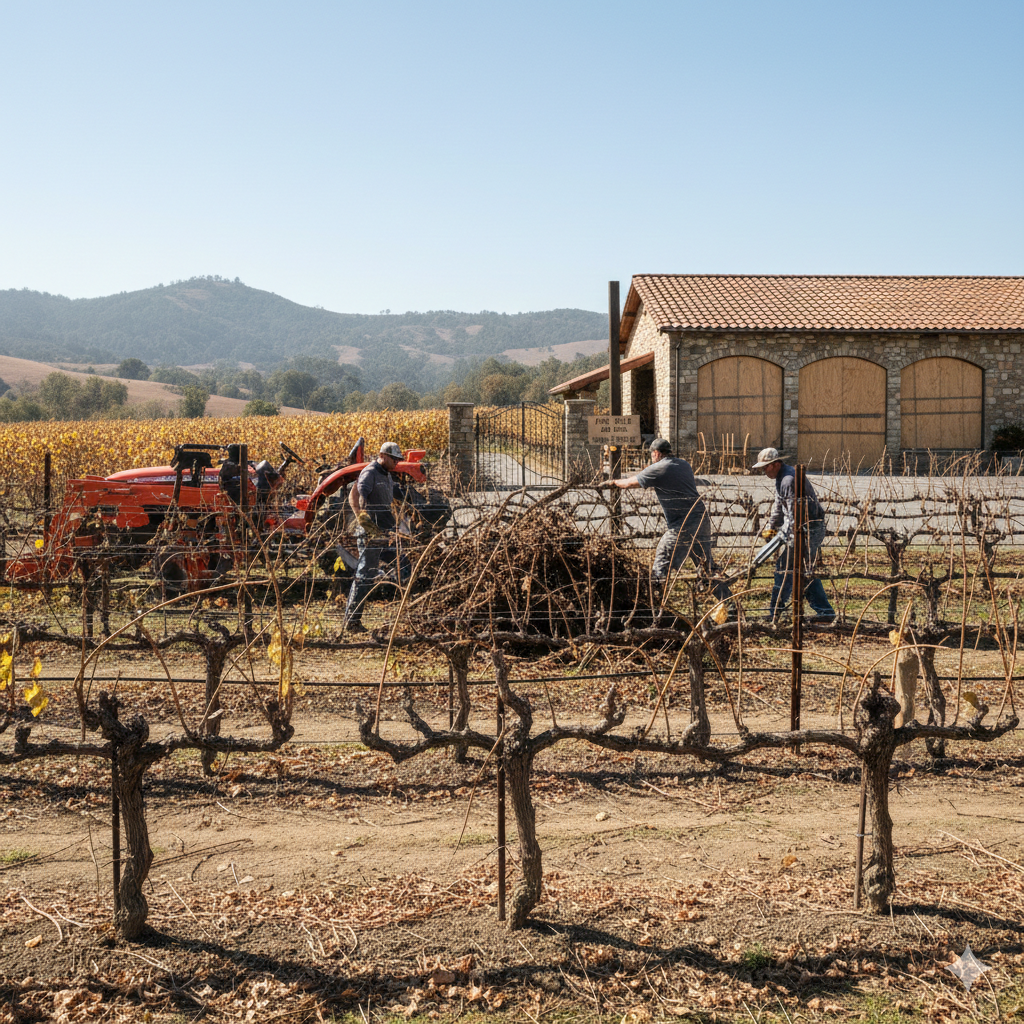
- Vineyard Removal: Between late 2024 and 2025, over 3,100 acres of vines were ripped out in Napa County. While some of this is to balance supply, much of it is a desperate “future-proofing” move—replanting with more heat-resistant clones or switching to different crops like olives and berries.
- Insurance Woes: Following the catastrophic fires of previous years, insurance premiums for wineries have become a crushing line item, forcing some smaller family-owned estates to sell to larger conglomerates just to stay afloat.
The Bottom Line
Napa Valley isn’t going anywhere, but it is changing. The era of “passive growth”—where you could open a tasting room and wait for the money to roll in—is officially over. The wineries surviving 2026 are those willing to kill their darlings, lower their barriers to entry, and prove to a new generation why Napa wine is still worth the price of admission.
Cheers !!!