


The wine map of the world is being redrawn. As global temperatures rise and extreme weather events become the new normal, the traditional rules of terroir are being aggressively challenged. Winemakers from Napa Valley to the Bordeaux region are facing a critical realization: the grapes they are currently growing may not be sustainable in the very near future.
The 2020s have seen the industry shift from passive climate concern to active, science-driven adaptation. While early responses involved changing cellar techniques (like adjusting acid or managing higher alcohols), 2026 is seeing the revolution move into the soil itself. Wineries are now implementing radical planting strategies to ensure their survival. Here is how the vineyard is being redesigned for the climate of tomorrow.
1. The Migration North (and Up)
For decades, the ideal vineyard site was determined by sunny, well-drained slopes that maximized fruit ripeness. In 2026, the strategy is about seeking coolness and shade.
Moving to Higher Latitudes
The traditional limits of the “wine belt” (roughly $30^{\circ}$–$50^{\circ}$ latitude) are expanding. Wineries in the Northern Hemisphere are establishing experimental vineyards significantly further north (like Denmark, Sweden, and southern England), while in the Southern Hemisphere, Tasmania and the southernmost tips of Patagonia are booming.
Seeking Verticality
If moving horizontally isn’t an option, wineries are climbing. The Dão region in Portugal and the foothills of the Andes in Argentina are examples where wineries are abandoning low-altitude sites for experimental blocks 300 to 500 meters higher. This vertical move provides the diurnal temperature shift (cool nights) necessary to preserve freshness and slow down fruit ripening.
2. Rewriting the Varietal DNA
This is perhaps the most controversial strategy, as it often means uprooting centuries of tradition (and strict legal classifications).
The Trials of Bordeaux
The historic decision by the INAO in Bordeaux to allow seven new heat-resistant and disease-resistant varieties (like Touriga Nacional and Alvarinho) for limited blending into AOC wines was just the beginning. In 2026, these new varieties are moving beyond small test blocks and are being fully integrated into commercial plantings across top estates.
Experimenting with Indigenous and Drought-Tolerant Grapes
In warm Mediterranean climates, wineries are Rediscovering ancient, thick-skinned grapes that require minimal water. In Sicily, traditional grapes like Nero d’Avola are thriving, while experimental plantings of drought-tolerant grapes like Xinomavro (from Greece) are making headway in parts of South Australia.
3. Precision Engineering for Sun and Water
It’s not just what we plant, but how we plant. Vineyard architecture has been completely redesigned.
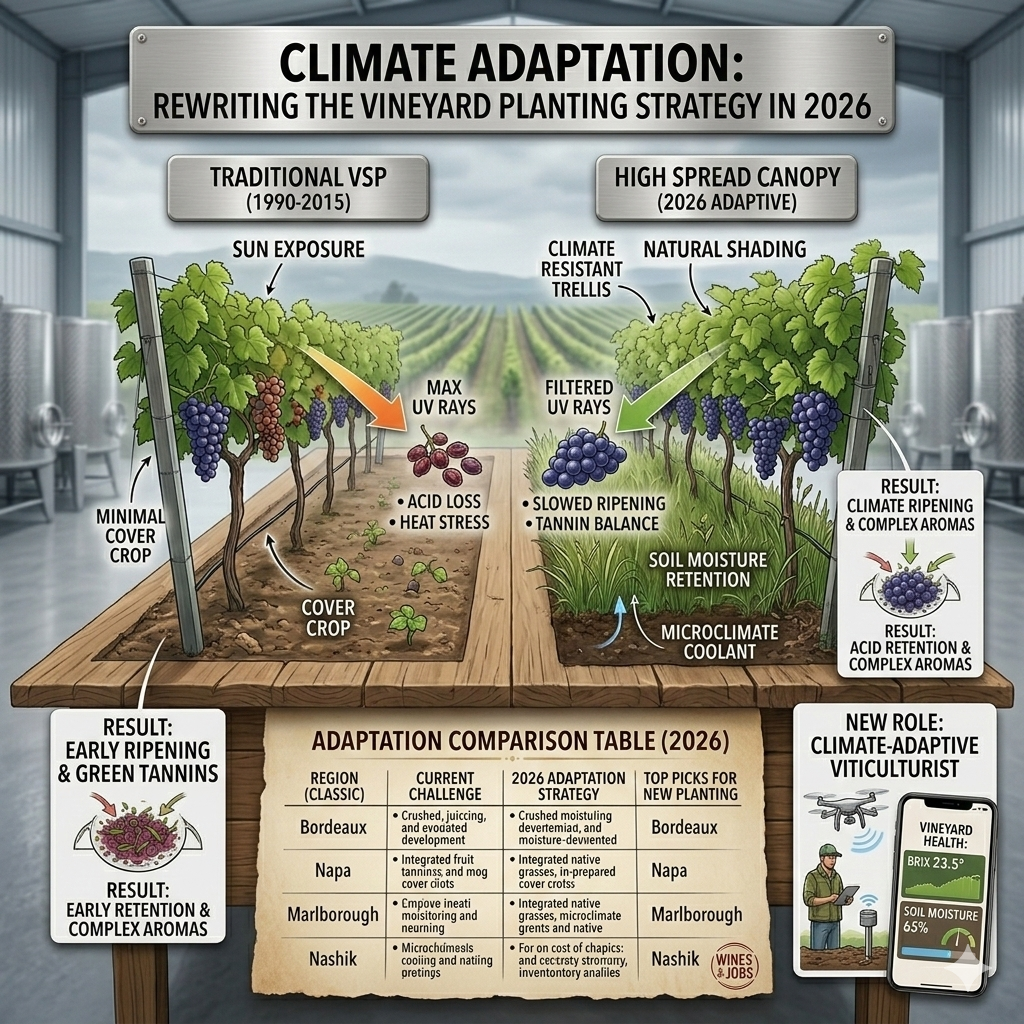
- Rethinking Trellising: The classic Vertical Shoot Positioning (VSP) system, designed to maximize sun exposure, is being replaced in hot regions. Instead, “Sprawl” or “Bush Vine” trellising is returning, allowing the canopy (leaves) to naturally shade the fruit, protecting it from intense UV rays and preventing “berry burn.”
- Targeted Rootstocks: Winemakers are prioritizing rootstock selection. In 2026, new drought-tolerant rootstocks are being grafted onto premium scions, forcing the vines to grow their roots deeper into the bedrock for access to moisture, rather than relying on shallow surface water.
- Integrated Cover Cropping: A bare vineyard floor is now seen as a liability. Cover crops are non-negotiable for soil health, water retention, and as a natural coolant to reduce the temperature of the vineyard microclimate.
The Winemaker’s Strategic Choice (2026)
| Region (Classic) | Current Challenge | 2026 Adaptation Strategy | Top Picks for New Planting |
| Bordeaux | Excessive Heat/Ripeness | Heat-resistant Blending Varieties | Touriga Nacional, Castets |
| Marlborough | UV Exposure/Acid Loss | Shading Trellising & Cover Cropping | Alvarinho, Chenin Blanc |
| Napa Valley | Water Scarcity & Wildfires | Deep-rooting Rootstocks & Moving High | Grenache, Cabernet Franc |
| Nashik | Extreme Tropical Monsoon | Improved Drainage & Heat-tolerant Whites | Grillo, Vermentino |
The New Role: The “Climate-Adaptive Viticulturist”
This profound shift in planting strategies has created a new, crucial role in the wine industry: the climate-adaptive viticulturist. They are not just farmers; they are data scientists and environmental architects who understand geology, climatology, and plant physiology.
The future of wine belongs to those who adapt. The vineyards planted today will determine the flavors and textures of the wines we drink in 2046. The science of the vineyard has never been more vital.
🍷 Published on Wines and Jobs
Connecting the global wine community through insight, expertise, and opportunity.
The rise of climate adaptation is driving unprecedented demand for viticultural specialists, data analysts, and researchers. If you are passionate about the intersection of wine and environmental science, explore the latest career opportunities on our job board.
- Find Your Next Viticultural Role: Browse Vineyard Operation Jobs
- Grow Your Expertise: Read More Expert Blogs
Cheers !!!