


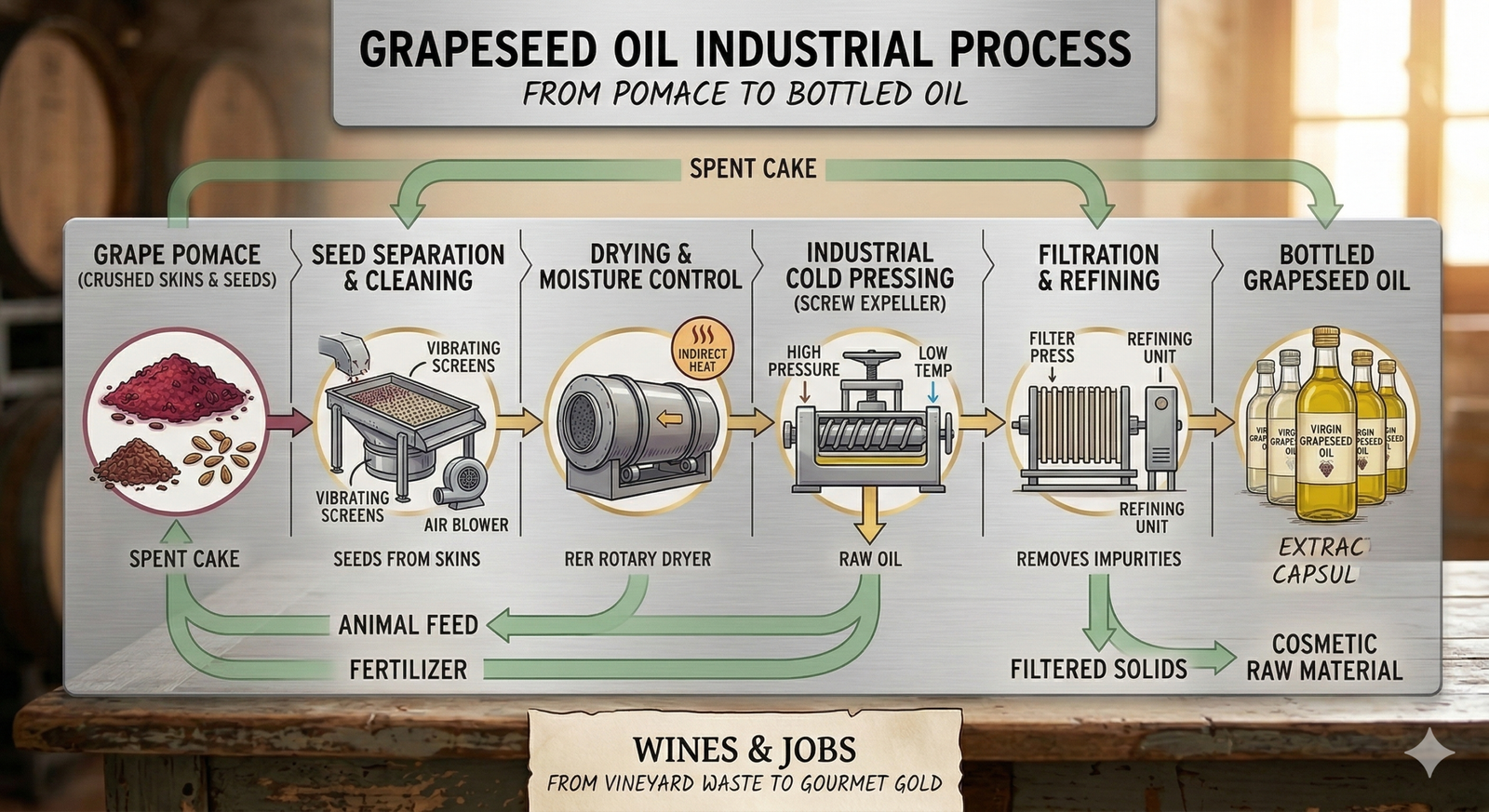
Grapeseed oil has transformed from a humble winemaking byproduct into a high-performance staple in both gourmet kitchens and luxury skincare routines. If you’ve ever wondered how those tiny seeds from the crush pad become a versatile “all-purpose” oil, here is the breakdown of the science, technology, and global reach of grapeseed oil.
How is it Made? The Technology Behind the Oil
Grapeseed oil is notoriously difficult to extract because the seeds contain only about 10% to 15% oil. To get a single liter of oil, you need approximately 400 to 500 kilograms of grape pomace. Winemakers and oil producers use three primary technologies to bridge this gap:
1. Cold Pressing (The Artisan Method)
This uses a mechanical screw press (expeller) to crush the seeds at temperatures below 50°C.
- The Tech: No chemicals are used. It’s a slow, high-pressure process that preserves the oil’s natural green-yellow color and “nutty” flavor.
- Result: A premium “Virgin” oil rich in Vitamin E and antioxidants, but with a lower yield and higher price point.
2. Solvent Extraction (The Industrial Method)
This is the most common method for mass-market oils. After the seeds are dried and flaked, a food-grade solvent (usually hexane) is used to wash the oil out of the seeds.
- The Tech: The mixture is heated to evaporate the solvent, which is then recycled back into the system.
- Result: Highly efficient with a near-total oil recovery. The final product is neutral, odorless, and has a very high smoke point.
3. Supercritical CO_2 Extraction (The Future)
The “gold standard” for the pharmaceutical and cosmetic industries.
- The Tech: Carbon dioxide is pressurized into a “supercritical” state where it acts as both a gas and a liquid to dissolve the oil out of the seed.
- Result: No heat damage, zero chemical residue, and total purity.
Where is it Produced? Global Hubs
Not surprisingly, the world’s leading grapeseed oil producers are the same countries that lead in wine production.
- Europe (32% of Market): Italy, France, and Spain are the traditional powerhouses. In these regions, grapeseed oil is the “chef’s choice” for searing fish and delicate seafood.
- North America: The US (California) holds a massive share of the market, driven by high consumer demand for healthy “specialty” oils.
- Emerging Regions: China and India are rapidly increasing their imports and local refining capacities as health-conscious middle classes grow.
One Oil, Three Worlds: Major Uses
| Category | Primary Use | Why it works |
| Culinary | Searing, Sauteing, Baking | High smoke point (216°C) and neutral flavor. |
| Cosmetic | Face Serums & Hair Oils | Non-comedogenic (won’t clog pores) and high in Linoleic Acid. |
| Industrial | Soaps & Varnishes | Excellent emollient properties and stable shelf life. |
🍷 Published on Wines and Jobs
Connecting the global wine community through insight, expertise, and opportunity.
The grapeseed oil sector is a perfect example of the “circular economy” in the wine industry. As demand grows, so does the need for production managers and extraction specialists who understand both viticulture and food science.
- Find Your Next Role: Browse Wine & Tech Jobs
- Expand Your Network: Join our community at www.winesandjobs.com.
Would you like me to create a flowchart image showing the step-by-step industrial process from pomace to bottled oil for your blog?
Grapeseed Oil: How it’s made and its benefits
This video provides a great visual overview of the extraction process and the health benefits of using grapeseed oil.