
Winemaking has spent centuries defined by romantic traditions: dusty cellars, handwritten harvest logs, and growers walking the rows to sample fruit by hand. While sensory craft remains the soul of viticulture, the daily management of modern vineyards is undergoing a massive digital overhaul.
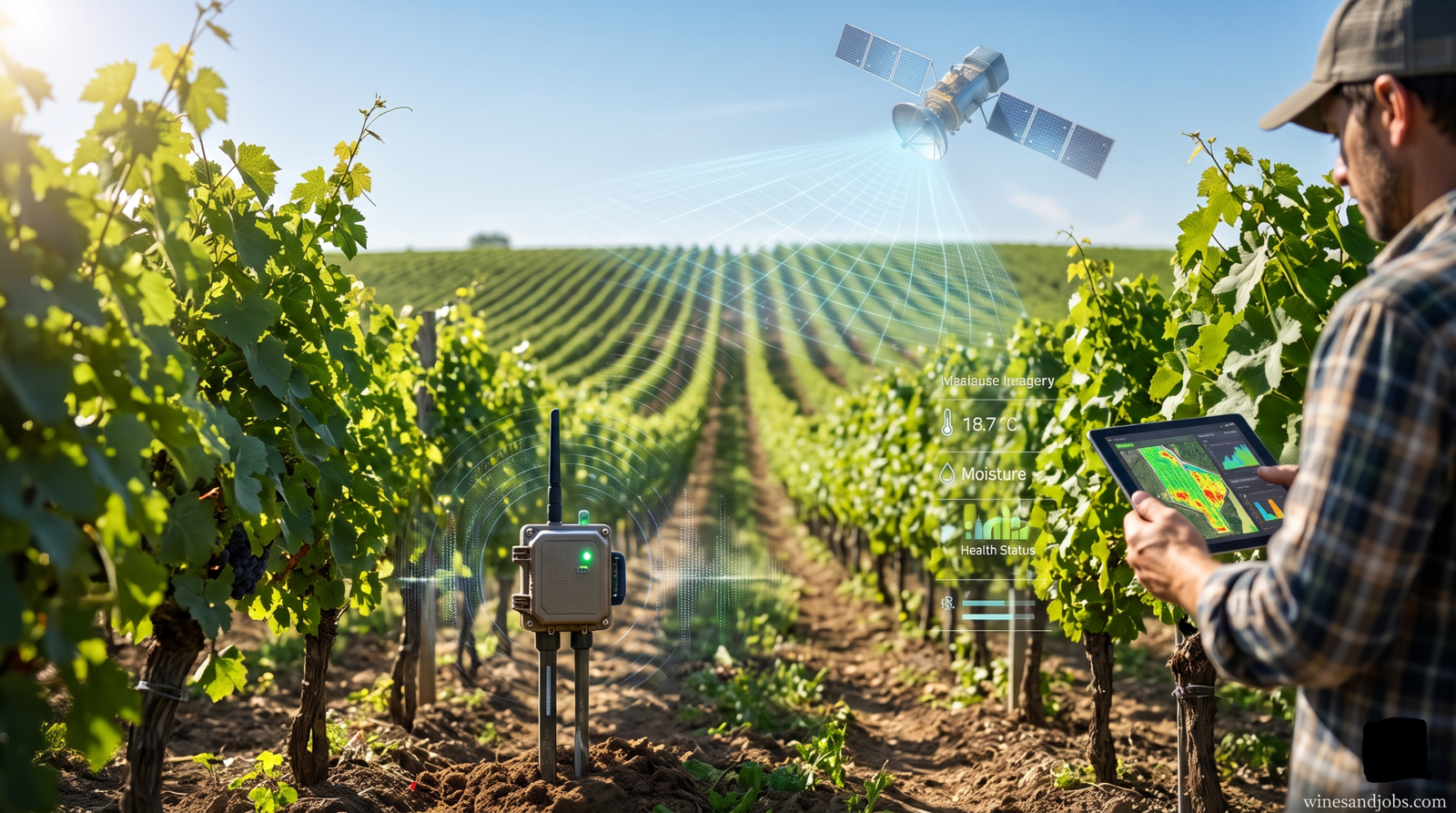
Today, the Internet of Things (IoT) connects the soil below to satellites in orbit, creating an intelligent ecosystem known as precision viticulture. For estate owners, vineyard managers, and agritech professionals, this technological shift is optimizing yields, mitigating climate volatility, and transforming daily farm routines into data-backed science.
1. The Multi-Layered Vineyard Stack: Orbit to Soil
Modern vineyard IoT systems do not rely on a single gadget. Instead, they operate as an interconnected data network deployed across three distinct tiers:
MACRO LAYER   --->  Satellites & Drones (Canopy vigor, NDVI, thermal stress)
MESO LAYE     --->  Micro-Weather Stations (Row-level humidity, wind, temp)
MICRO LAYER   --->  In-Ground Soil Probes (Moisture, root depth, salinity)
The Orbital View: Multispectral Satellite Imagery
Commercial satellites (such as Sentinel and Landsat) capture imagery across both visible and near-infrared (NIR) light spectrums.
- Normalized Difference Vegetation Index (NDVI): Measures chlorophyll absorption to generate vigor maps. Overly vigorous leaf canopies can shade grape clusters too heavily, while low-vigor sections reveal underperforming vines or disease outbreaks before they are visible to the naked eye.
- Macro-Zoning: Enables growers to divide a single vineyard into micro-parcels for selective harvesting based on berry maturation.
The Micro View: In-Ground IoT Probes
While satellites observe the leaves, wireless sensors buried at varying depths (e.g., 30 cm, 60 cm, and 90 cm) monitor the root zone:
- Volumetric Water Content (VWC): Real-time moisture readings dictate exact irrigation needs, eliminating both water waste and drought-induced vine shutdown.
- Electrical Conductivity (Salinity): Ensures mineral buildup in irrigated soil does not poison delicate rootstocks.
2. Real-World Vineyard Workflows Transformed
The impact of IoT on operational viticulture is visible in four key daily applications:
| Operational Area | Traditional Approach | The IoT-Driven Workflow |
| Irrigation | Scheduled timers or visual checking of topsoil. | Regulated Deficit Irrigation (RDI): Automated drip lines trigger only when soil probes signal precise threshold stress needed to concentrate grape sugars. |
| Disease Prevention | Routine calendar-based chemical spraying. | Micro-Climate Pathogen Tracking: Sensor pods measure canopy leaf wetness and humidity. Algorithms predict mildew or botrytis outbreaks 48 hours early, slashing spray frequency. |
| Frost Protection | Constant overnight physical checks during spring cold snaps. | Automated Thermal Alerts: Row-level sensors wake vineyard managers when temperatures drop near freezing, triggering targeted wind machines or sprinklers automatically. |
| Harvest Timing | Manual sampling across random vineyard blocks. | Variable-Rate Selective Harvest: NDVI maps pinpoint exactly which blocks have reached peak phenolic ripeness, allowing crews to harvest higher-value reserve fruit separately. |
3. The Career Spillover: New Roles at WinesAndJobs
The digitalization of vineyards is breaking down the divide between tech hubs and rural agriculture, opening high-value career paths:
- Precision Viticulture Specialist: Agronomists who interpret sensor feeds, tune algorithmic threshold alerts, and design variable-rate application plans.
- Vineyard IoT Field Technician: Technicians skilled in deploying low-power wireless mesh networks (such as LoRaWAN) across rugged, off-grid terrains.
- Agri-Data Analyst: Data specialists turning years of harvest metrics, canopy satellite data, and soil history into predictive harvest models.
Moving from Intuition to Precision
Integrating IoT into the vineyard is not about replacing the human palate or the intuition of seasoned winemakers. Rather, it provides them with the granular data needed to protect their fruit, conserve critical water supplies, and navigate unpredictable climate shifts. For the modern wine professional, understanding this technology is quickly shifting from an optional novelty into a standard operational requirement.
Looking to stay ahead of the curve in the evolving world of wine and viticulture careers? Follow winesandjobs.com for industry analyses, expert guides, and the latest opportunities across modern wine operations.
Cheers !!!