


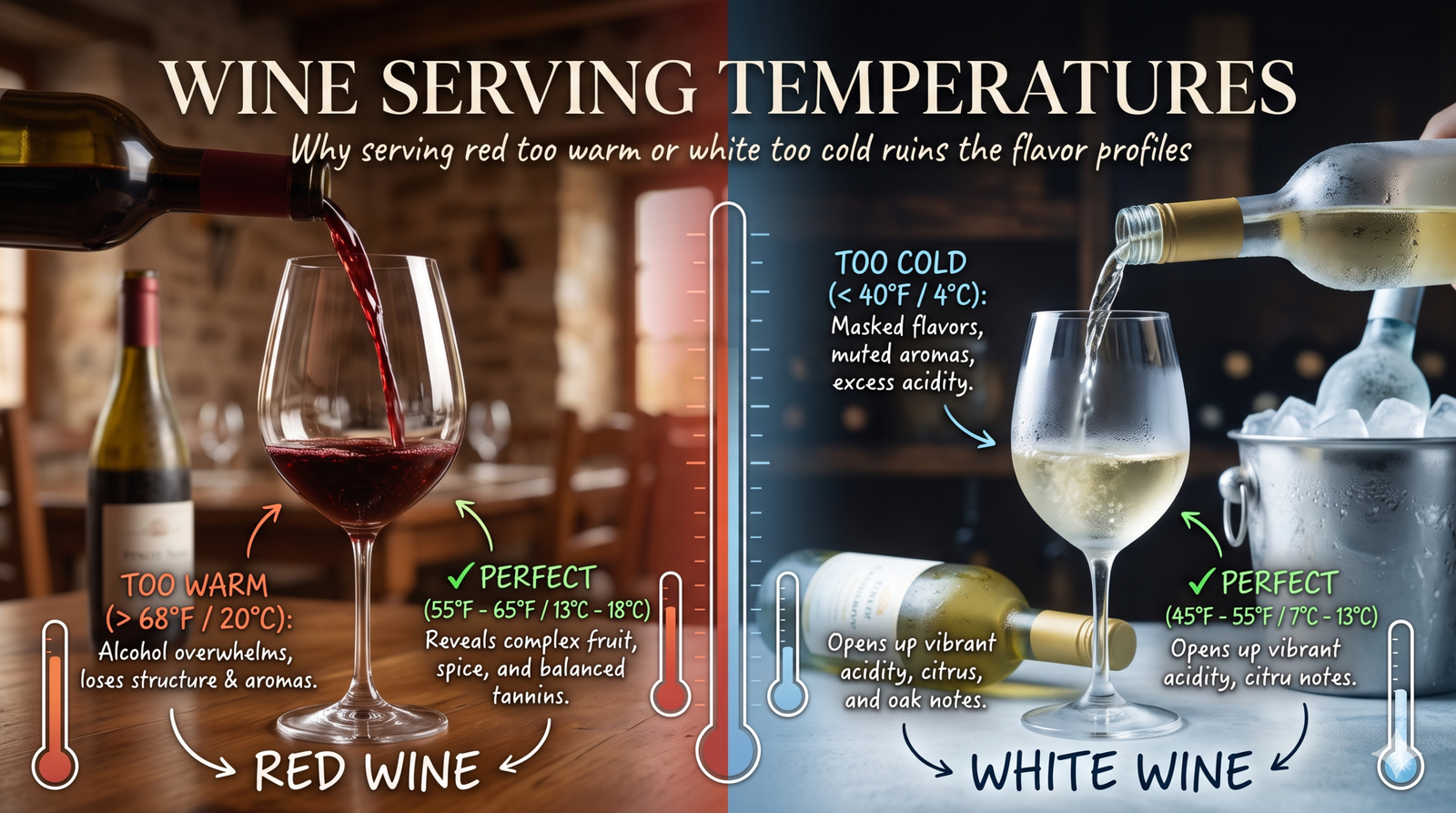
Serving wine at the wrong temperature is the single quickest way to ruin a high-quality bottle. Even if you buy an expensive vintage, pouring a red wine too warm or a white wine too cold completely alters its chemical structure and flavor profile.
When temperature limits are ignored, it suppresses the winemaker’s intended flavor, throwing acidity, alcohol, and tannins completely out of balance.
White Wine: The Danger of the “Ice Cold” Trap
Most casual drinkers serve white wine straight out of a standard kitchen refrigerator, which operates around 3°C to 4°C. This is far too cold
The Muted Aroma Effect: Cold temperatures compress volatile aroma compounds. When a white wine is freezing, the molecules cannot evaporate off the surface. A complex Chardonnay from Wine Cooler Empire
will end up smelling and tasting completely blank
Aggressive Acid and Bitterness: Extreme cold masks fruit flavors while over-emphasizing acidity and structural bitterness. The wine loses its rich texture and instead tastes sharp, thin, and aggressively sour.
The Solution: Take white wines out of the refrigerator 20 to 30 minutes before pouring to let them breathe and wake up to their ideal target range of 7°C to 12°C.
Red Wine: The Myth of “Room Temperature”
The historical rule to “serve red wine at room temperature” originated centuries ago in drafty, stone European châteaux, where indoor spaces naturally averaged a brisk 15°C to 18°C. Modern climate-controlled homes sit closer to 22°C to 24°C, which is far too hot for red wine.
The “Alcohol Burn”: When red wine passes 20°C, the ethanol inside the liquid begins to evaporate rapidly. This creates a distinct chemical “burn” on the nose and throat, overpowering the delicate fruit, spice, or floral notes.
Flabby and Heavy Texture: High heat breaks down the refreshing perception of acidity. Without crisp acid to balance out the sugars, the wine begins to taste “flabby,” syrupy, flat, and overly heavy on the palate.
The Solution: Pop your red wine bottle inside the refrigerator for 15 to 20 minutes right before serving. Bringing it down to a cellar-cool temperature range of 12°C to 20°C keeps the fruit crisp and the alcohol well-integrated.
The Ideal Temperature Matrix
To keep your wine balanced, utilize the standard serving guidelines established by top educators like Wine Folly: [1]
| Wine Style | Ideal Temp Range (°C) | Ideal Temp Range (°F) | Examples |
|---|---|---|---|
| Sparkling & Light Whites | 3°C – 7°C | 38°F – 45°F | Prosecco, Champagne, Pinot Grigio, Sauvignon Blanc |
| Full-Bodied Whites & Rosés | 7°C – 12°C | 44°F – 55°F | Oaked Chardonnay, Viognier, Grenache Rosé |
| Light & Medium Reds | 12°C – 15°C | 55°F – 60°F | Pinot Noir, Gamay, Beaujolais, Grenache |
| Bold & Full-Bodied Reds | 15°C – 20°C | 60°F – 68°F | Cabernet Sauvignon, Syrah, Malbec, Bordeaux |