


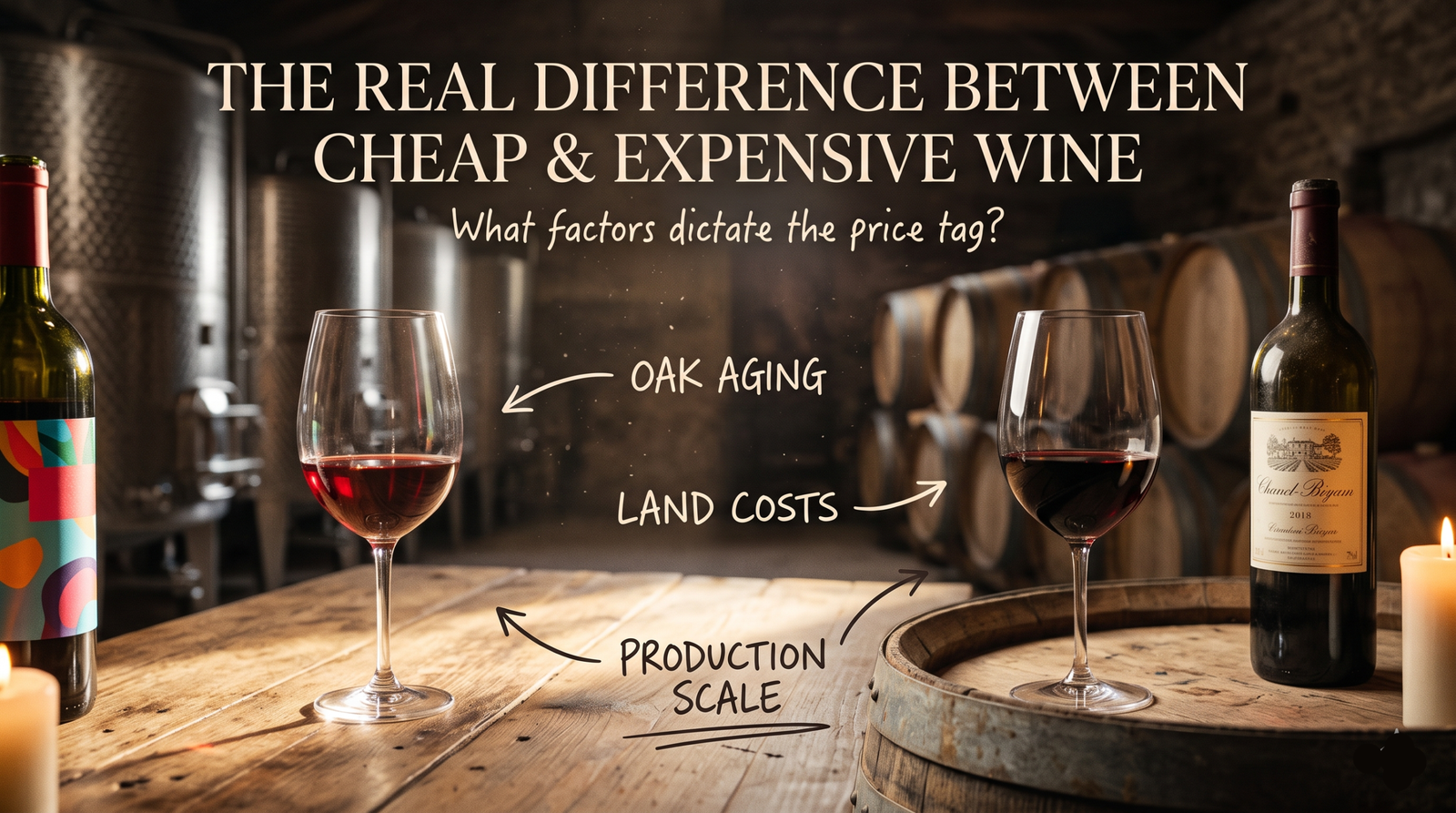
A bottle of wine can cost ₹400 or ₹40,000, even though both are made from the exact same agricultural product: grapes. While branding and prestige account for extreme luxury pricing, the baseline cost of a bottle is dictated by three hard structural factors: production scale, aging methods, and the real estate value of the vineyard.
Here is exactly what you are paying for when you cross the line from a budget bottle to a premium one:
1. Production Scale (Handcrafted vs. Mass-Manufactured)
Cheap wine is treated like an industrial commodity, whereas expensive wine is treated like an artisanal craft.
- The Harvest: Budget wines are harvested using massive mechanical tractors that shake everything off the vines—ripe grapes, unripe grapes, leaves, and insects—into a giant bin. Premium wineries use hand-harvesting, hiring skilled laborers to meticulously clip only the perfectly ripe clusters.
Yield Management: Mass-market vineyards force their vines to produce as many grapes as possible to maximize volume, which dilutes the flavor of each grape. High-end winemakers aggressively prune their vines so the plant concentrates all its nutrients and sugars into a smaller yield of highly concentrated, flavorful grapes.
Additives and Manipulation: When dealing with millions of liters of low-flavor grapes, industrial winemakers rely on “mega-purple” (a thick color additive), synthetic acids, and industrial yeasts to manufactured a consistent flavor year after year. Premium wine relies strictly on the natural chemistry of high-quality fruit.
2. The Oak Aging Tax
If a wine tastes like vanilla, baking spices, and toasted caramel, it spent time in an oak barrel. However, real wood is incredibly expensive.
The “Oak Infusion” Hack: Budget wines cannot afford real barrels. Instead, they are aged in massive, sterile stainless steel tanks, and winemakers submerge giant tea bags of oak chips, sawdust, or oak staves into the wine to chemically mimic the flavor of barrel-aging at a fraction of the cost.
Real Oak Barrels: A single new French oak barrel costs upwards of ₹1,00,000 to ₹1,25,000 and can only hold about 300 bottles worth of wine. Furthermore, a barrel only imparts significant flavor for its first two to three fills. This adds a direct tax of ₹300–₹500 per bottle just for the vessel it sat in.
- Time and Cash Flow: A cheap wine is fermented, bottled, and slapped on a grocery store shelf within a matter of months. A premium Rioja or Cabernet Sauvignon might sit in a winery’s cellar for 2 to 5 years before it is sold. The winery must sit on that inventory without making a profit, which pushes the ultimate retail price up.
3. Vineyard Real Estate and “Terroir”
Just like real estate, location dictates price. A plot of land on a generic flat plain is cheap; a historic hillside in a world-famous region is priceless.
- Prestigious Appellations: A vineyard in the heart of Napa Valley (California) or Bordeaux (France) costs millions of rupees per acre. The cost of that land is heavily factored into the bottle price. Conversely, bulk wines are sourced from massive, flat inland valleys where land is cheap and plentiful.
- The Struggle of Hillside Vineyards: The best wines often come from steep, rocky hillsides. The soil is poor, forcing the vine roots to dig deep for water, which creates complex flavors. However, tractors cannot operate on steep slopes. Every single action—from pruning to harvesting—must be done by hand on foot, drastically increasing labor costs.
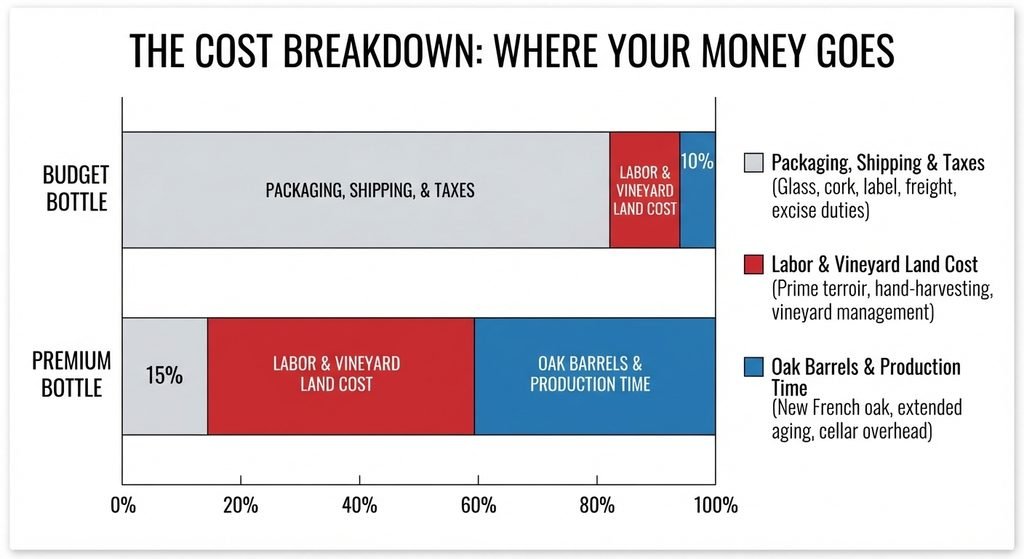
Cost Breakdown: Where Your Money Goes
To see how these factors accumulate, look at how the capital is distributed inside a budget bottle versus a premium bottle. In a cheap bottle, you are mostly paying for the glass, the screwcap, shipping, and taxes. In an expensive bottle, you are actually paying for the liquid inside.
The Sweet Spot for Wine Shoppers
According to wine professionals, the point of diminishing returns for wine quality sits roughly between ₹1,500 and ₹3,500.
When you buy a wine below ₹800, a massive percentage of your money goes toward the fixed costs of manufacturing the heavy glass bottle, global shipping freights, and government excise duties—leaving almost nothing for the actual quality of the grapes. When you step up to the ₹2,000 range, the fixed costs stay the same, but the extra money goes entirely toward better fruit, real oak barrels, and careful craftsmanship.
Beyond ₹5,000, you are no longer paying for production costs; you are paying for brand prestige, scarcity, and collectibility.
If you want to dive deeper into the world of fine wines, explore curated tasting experiences, and source premium bottles directly from top-tier vineyards, head over to winesandjobs.com. By visiting the website today, you can grab exclusive limited-time opportunities.