


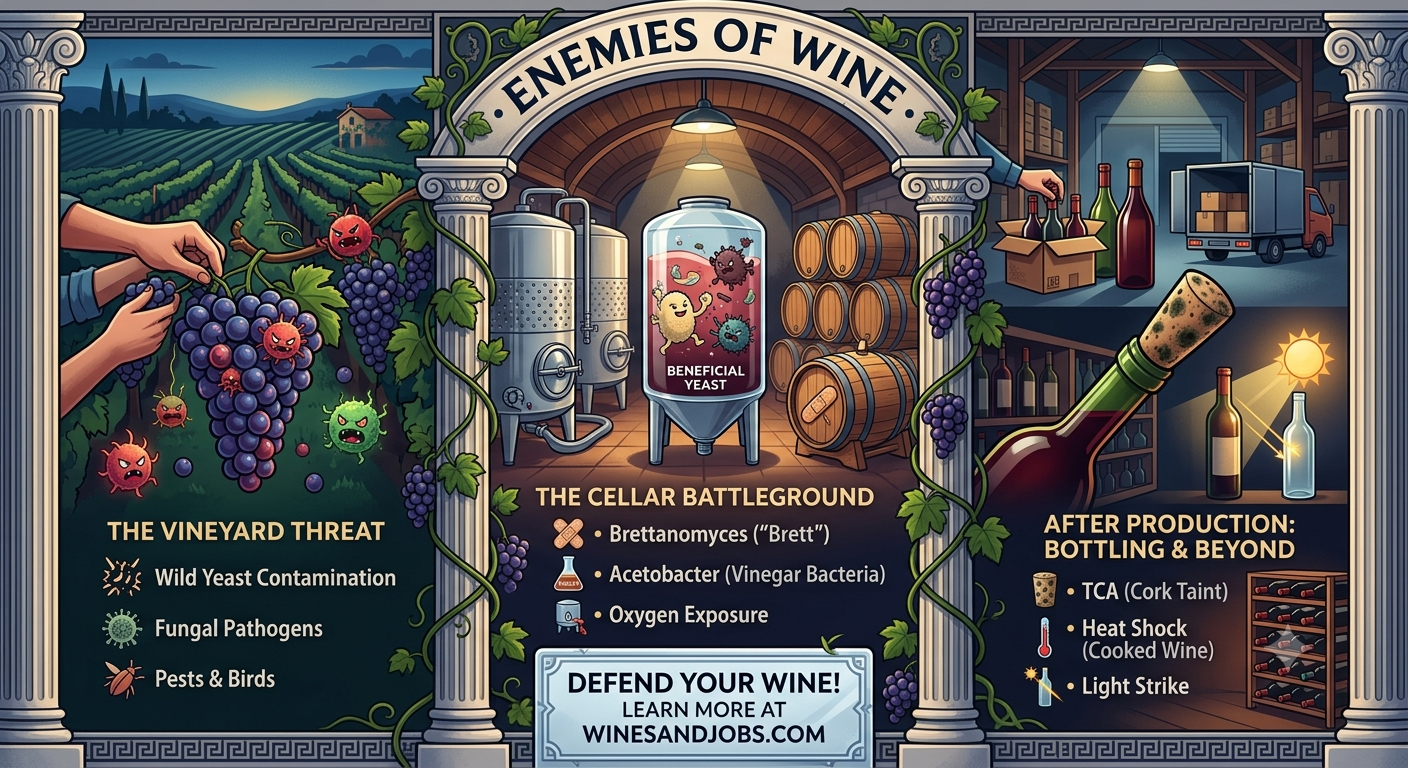
From the vineyard post-harvest to the cellar and final storage, winemaking is a delicate balance between art and biochemical management. Uncontrolled oxygen, wild microbes, temperature spikes, and improper seals can quickly ruin months of hard work.
Phase 1: Threats During Winemaking & Fermentation
1. Oxygen (The Double-Edged Sword)
While controlled micro-ox helps soften tannins in red wines, excess oxygen exposure early on leads to the destruction of delicate aromatic compounds, browning, and premature oxidation.
2. Wild & Spoilage Yeasts
- Brettanomyces (“Brett”): Thrives in wooden barrels and low-SO₂ environments, creating off-flavors reminiscent of barnyard, wet dog, or band-aids.
- Kloeckera & Hanseniaspora: Wild yeast strains found on grape skins that produce high levels of volatile acidity or ethyl acetate (nail polish remover notes) if fermentations lag.
3. Spoilage Bacteria
- Acetic Acid Bacteria (Acetobacter): Converts ethanol into acetic acid (vinegar) in the presence of air.
- Lactic Acid Bacteria (Lactobacillus, Pediococcus): Can cause sluggish fermentations, producing mousiness, excessive diacetyl (rancid butter), or oily “ropiness” in wine.
4. Temperature Extremes & Nutrient Starvation
Unmonitored heat during fermentation stresses yeast, producing hydrogen sulfide ($H_2S$) which smells of rotten eggs. If unaddressed, $H_2S$ forms foul mercaptans (cabbage, burnt rubber) that are far harder to remove.
Phase 2: Threats During Aging & Maturation
| Enemy | Cause | Effect on Wine | Mitigation Strategy |
| Headspace (Ullage) | Evaporation or un-topped barrels | Rapid oxidation, acetification | Consistent barrel topping, inert gas cover ($CO_2/N_2$) |
| Sanitation Breaches | Organic buildup in pumps, hoses, and wood | Cross-contamination of spoilage microbes | Strict caustic/acid sanitation cycles, steam cleaning |
| Volatile Acidity (VA) | Acetobacter growth during barrel aging | Sharp vinegar aroma and burning finish | Maintaining active molecular $SO_2$ levels and low cellar temperatures |
Phase 3: Threats After Production (Bottling, Logistics & Storage)
1. Cork Taint (2,4,6-Trichloroanisole / TCA)
TCA forms when naturally occurring airborne fungi react with chlorophenols in wood or cork processing. It strips the wine of its fruit flavors, leaving a moldy cardboard character.
2. Heat Stress & Thermal Shock (“Cooked Wine”)
Exposure to temperatures above 21°C (70°F) during transit or warehousing expands the liquid inside the bottle, pushing corks out, breaking vacuum seals, and accelerating oxidation—resulting in flat, stewed fruit flavors.
3. Lightstrike (UV Damage)
Sunlight and fluorescent indoor lighting penetrate clear or light glass bottles, reacting with riboflavin and amino acids to form unpleasant dimethyl disulfide compounds (wet cardboard or cooked cabbage aroma).
Shielding Your Wine with the Right Expertise
Preventing these threats requires skilled viticulturists, attentive cellar hands, and precise laboratory technicians. Whether you need an experienced enologist to monitor SO₂ levels or a logistics manager skilled in temperature-controlled supply chains, securing trained talent is your best defense against wine spoilage.
To hire qualified cellar staff or find your next role in the global wine industry, visit WinesAndJobs.com—connecting wine professionals and employers worldwide.
Cheers !!!