


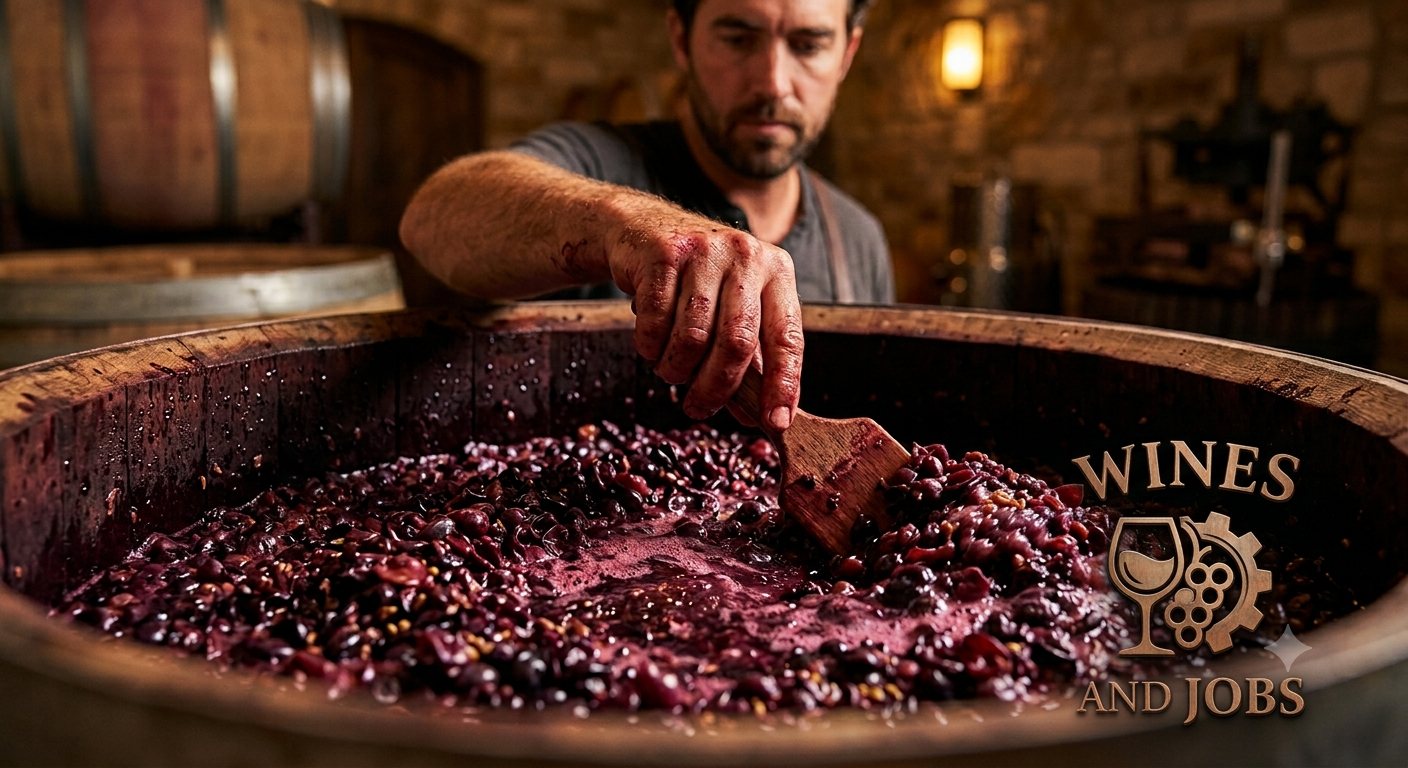
Maceration is the period when grape juice stays in contact with the grape skins, seeds, and sometimes stems during winemaking. It’s one of the key processes that determines a wine’s color, tannin, aroma, texture, and overall style.
Without maceration, almost all wine juice would press out clear and grayish-white. This crucial step—occurring between crushing and pressing—is what truly defines a wine’s visual and textural personality
Why does maceration matter?
Grape skins contain many of the compounds that give wine its character:
- Color: Especially important for red wines. The longer the juice remains with the skins, the more color can generally be extracted.
- Tannins: Skins and seeds contribute tannins, creating that drying or grippy sensation in your mouth.
- Aromas & flavor: Skin contact can extract aromatic and flavor compounds that influence the wine’s personality.
- Texture: Maceration can make a wine feel silky, structured, juicy, or sometimes more rustic and astringent.
What Maceration Extracts?
During this soaking phase, the grape juice absorbs three essential elements from the grape solids:
- Anthocyanins: The natural pigments found in grape skins that give red and rosé wines their color.
- Tannins: Organic compounds from skins, seeds, and stems that give wine its structure, body, and that drying, astringent feeling in your mouth.
- Aromas & Flavours: Essential oils and complex compounds that build the wine’s unique varietal character.
How Maceration Defines Wine Styles
A winemaker’s decision on how long to let the juice sit with the skins completely alters the style of wine in your glass.
| Wine Style | Maceration Approach | Impact on the Wine |
|---|---|---|
| White Wines | None to Minimal | Typically pressed immediately to keep the wine light, crisp, and free of bitter tannins. |
| Rosé Wines | Short Contact (Hours) | Red grapes are soaked just long enough to tint the juice a delicate pink before being pressed. |
| Red Wines | Extended Contact (Days to Weeks) | Deeply extracts color and heavy tannins required for structure and long-term aging. |
| Orange Wines | Extended Contact (Weeks to Months) | White grapes are left to macerate like red grapes, resulting in an amber color and a gripping, tannic texture. |
How long does maceration last?
It can range from a few hours to several weeks, depending on the grape, desired style, and winemaking technique.
Generally:
Short maceration → lighter color, softer structure, fresher fruit
Long maceration → deeper color, more tannin, greater structure and complexity
But longer doesn’t automatically mean better. Too much extraction can produce excessive bitterness, harsh tannins, or an unbalanced wine.
Cold Soak (Pre-Fermentation Maceration): Winemakers chill the unfermented grapes and juice to keep yeast dormant. This gently extracts bright fruit aromas and intense colors without pulling out the harsher tannins, which require alcohol to dissolve. It is widely used for thin-skinned varieties like Pinot Noir.
Extended Maceration (Post-Fermentation): Leaving the wine on its skins after the sugar has fully converted to alcohol. The alcohol softens the high-impact skin tannins, creating a smoother, more complex, and highly age-worthy wine like Cabernet Sauvignon or Nebbiolo.
Carbonic Maceration: Grapes are not crushed; instead, whole clusters are placed into a sealed tank filled with carbon dioxide. Fermentation happens inside each individual berry. This yields incredibly fruity, low-tannin wines meant to be drunk fresh, famously exemplified by Beaujolais Nouveau.
What should a wine lover look for?
When tasting a wine, think about extraction.
Ask yourself:
Color: Is it pale, bright, deep, or opaque?
Aroma: Does it smell primarily fresh and fruity, or are there more complex earthy, spicy, herbal, or dried-fruit notes?
Texture: Is it silky and smooth, or does it grip your gums?
Finish: Does the tannin disappear quickly, or does it linger?
These observations can give you clues about how the wine was made—including how the grapes were macerated.
For readers who want to deepen their knowledge of wine, winemaking, and the broader wine industry, winesandjobs.com is a valuable resource. The website provides informative content and industry-focused insights, while also offering opportunities to explore career and job opportunities within the wine sector. Whether you are a wine enthusiast looking to learn more or a professional seeking to develop your career, WinesAndJons.com can be a useful platform for further information and opportunities.
Cheers !!!