
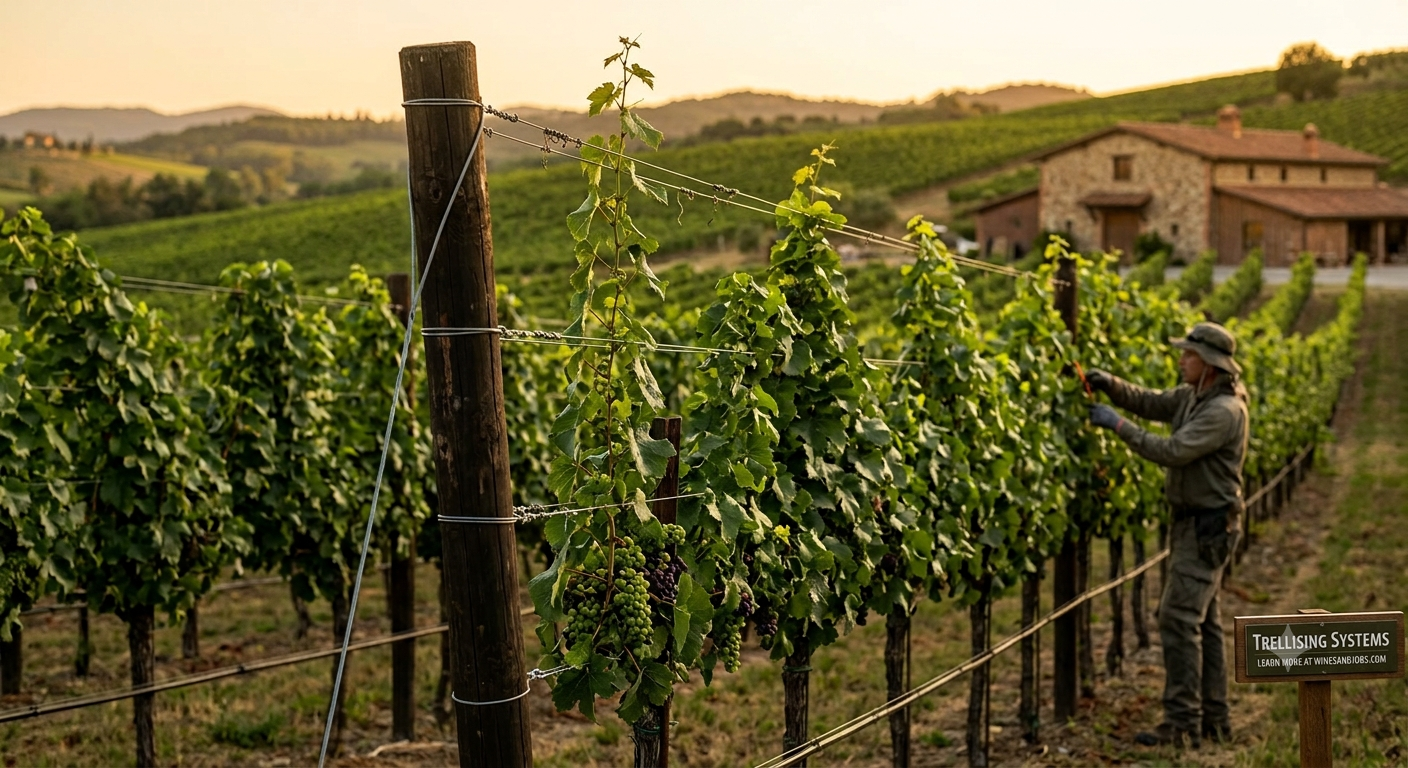
Mastering the architecture of the vineyard is part art, part precise agricultural science. Whether you are managing an established estate or stepping into your first season in viticulture, understanding vine trellising systems is fundamental to growing quality fruit and maintaining a sustainable yield.
In this guide, we break down why trellising matters, explore the most common systems, and look at how training choices shape both wine quality and vineyard management.
Why Trellising Matters
A trellising system isn’t just a physical support structure; it directly dictates how a vine interacts with its environment. Properly engineered canopy management achieves several vital goals:
- Sunlight Exposure: Maximizes photosynthesis in leaves while ensuring clusters get enough ambient light for optimal phenolic ripeness.
- Airflow & Disease Control: Opens the canopy to reduce humidity around fruit clusters, dramatically lowering the risk of fungal diseases like powdery mildew and botrytis.
- Efficiency: Standardizes vine structure for streamlined hand labor or mechanized canopy management, pruning, and harvesting.
Top Trellising Systems Explained
Choosing the right trellis depends heavily on climate, soil vigor, grape variety, and whether management is manual or mechanized.
| Trellis System | Best Suited For | Key Advantages | Considerations |
| VSP (Vertical Shoot Positioned) | Cool to moderate climates; low to medium vigor vines | High precision, uniform sun exposure, easy to hedge and work manually or mechanically | Risk of sunburn in hot, high-sunlight regions |
| Guyot (Cane Pruned) | Cool climates (e.g., Bordeaux, Burgundy) | Helps regulate crop yield naturally; good frost protection flexibility | Requires highly skilled labor for winter pruning |
| Cordon / Spur Pruned | Warm to hot climates; consistent yield varieties | Easier to prune quickly; adaptable to mechanical box pruning | Risk of trunk disease over time at permanent cordon sites |
| Geneva Double Curtain (GDC) | High-vigor vines; warm, high-yield regions | Splits the canopy to double surface area, maximizing light absorption | Higher initial installation and wire management costs |
| Lyre System | High-vigor soils requiring divided canopy structure | Excellent light penetration and yield potential without shading | Complex wire setups; higher infrastructure investment |
Canopy Management Essentials
Installing the posts and wires is only the first step. Maximizing the trellis structure requires ongoing seasonal tasks:
- Shooting & Tucking: Directing vertical growth between catch wires during late spring prevents sprawling and maintains open light corridors.
- Leaf Removal: Selective defoliation around the fruiting zone improves airflow and target exposure for sprays and sunlight.
- Hedging: Trimming the tops of shoots stops excessive vegetation growth and redirects the vine’s energy into ripening fruit.
Building Your Career in Viticulture
A vineyard’s success relies as much on skilled hands as it does on strong posts and tight wires. From vineyard managers and viticulturists to seasonal harvest crews, skilled labor keeps the wine industry moving forward.
If you are looking for your next role in the wine industry or searching for qualified talent to manage your estate, visit winesandjobs.com—the targeted platform connecting passionate professionals with opportunities across the wine world.
Cheers !!!