
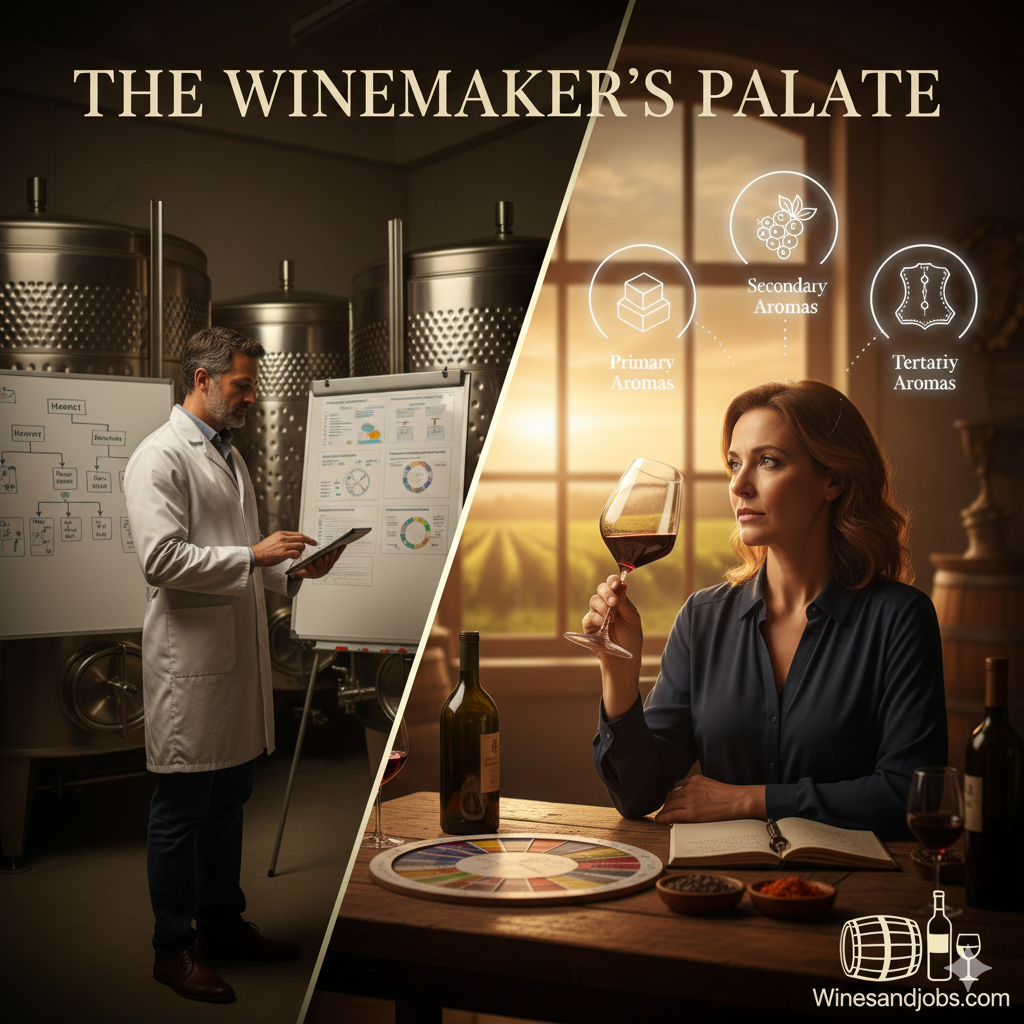
Building a career in the wine industry means mastering two distinct but inseparable worlds: the scientific process of the cellar and the sensory art of the palate.
At Winesandjobs.com, we know that being a great winemaker isn’t just about following a recipe; it’s about tasting a tank and knowing exactly which lever to pull. Whether you’re a seasoned pro or an aspiring cellar hand, here is how the winemaking journey directly shapes the glass.
🏗️ The Foundations: Winemaking in 5 Stages
Every bottle of wine follows a fundamental roadmap. Each decision made during these stages leaves a permanent fingerprint on the wine’s character.
1. The Harvest: Finding the Balance
The most important decision a winemaker makes happens in the vineyard. Picking early results in high acidity and lower alcohol (fresh and zesty), while picking later brings lower acidity, higher alcohol, and riper tannins (rich and bold).
Shutterstock
2. Crushing & Pressing
After the grapes are sorted, they are crushed into “must.”
- White Wine: The juice is quickly separated from the skins to keep it crisp and clear.
- Red Wine: The juice stays in contact with the skins (maceration) to extract color, flavor, and those structural tannins that dry out your mouth.
3. Fermentation: The Magic of Yeast
Yeast consumes grape sugar and poops out alcohol. But it’s not just about ABV; fermentation temperature matters. Cooler fermentations (42–50°F) preserve delicate floral and fruit aromas in whites, while warmer fermentations (up to 80–100°F) extract deeper colors and tannins for reds.
4. Clarification (Fining & Filtration)
To get that “brilliant” clarity, winemakers use fining agents (like clay or egg whites) to bind to floating particles.
5. Aging & Bottling
Aging in stainless steel keeps a wine fresh and “zippy.” Aging in oak barrels does the opposite—it allows tiny amounts of oxygen to soften the tannins and adds secondary flavors like vanilla, clove, and toast.
👅 The Art of the Palate: Tasting Like a Pro
Developing your palate isn’t about being “fancy”—it’s about building a mental library of flavors. When you taste professionally, you break the experience down into three layers:
The 3 Layers of Flavor
- Primary Aromas: Flavors that come from the grape itself (citrus, berries, floral, herbs).
- Secondary Aromas: Flavors from the winemaking process. Think of the “buttery” taste in Chardonnay—that comes from Malolactic Fermentation, where tart malic acid is converted into creamy lactic acid.
- Tertiary Aromas: Flavors from aging. Think of nutty, leather, or forest floor notes in older wines.
Structure: The “Feel” of the Wine
Your palate doesn’t just taste flavor; it feels structure:
- Acidity: That mouth-watering, puckering sensation on the sides of your tongue.
- Tannin: The drying, “fuzzy” feeling on your gums and teeth.
- Body: The weight of the wine. Does it feel like water (Light), 2% milk (Medium), or heavy cream (Full)?
🎓 Pro-Tip for Job Seekers
When interviewing for cellar roles, don’t just say you “like wine.” Use professional vocabulary. Talk about how maceration time affects tannin quality, or how fermentation temperature preserves volatile aromatics. This shows employers you have a “winemaker’s palate”—the ability to connect what you taste to what you do in the cellar.
Looking for your next harvest role? Check out our latest listings at Winesandjobs.com.
Cheers!!!