
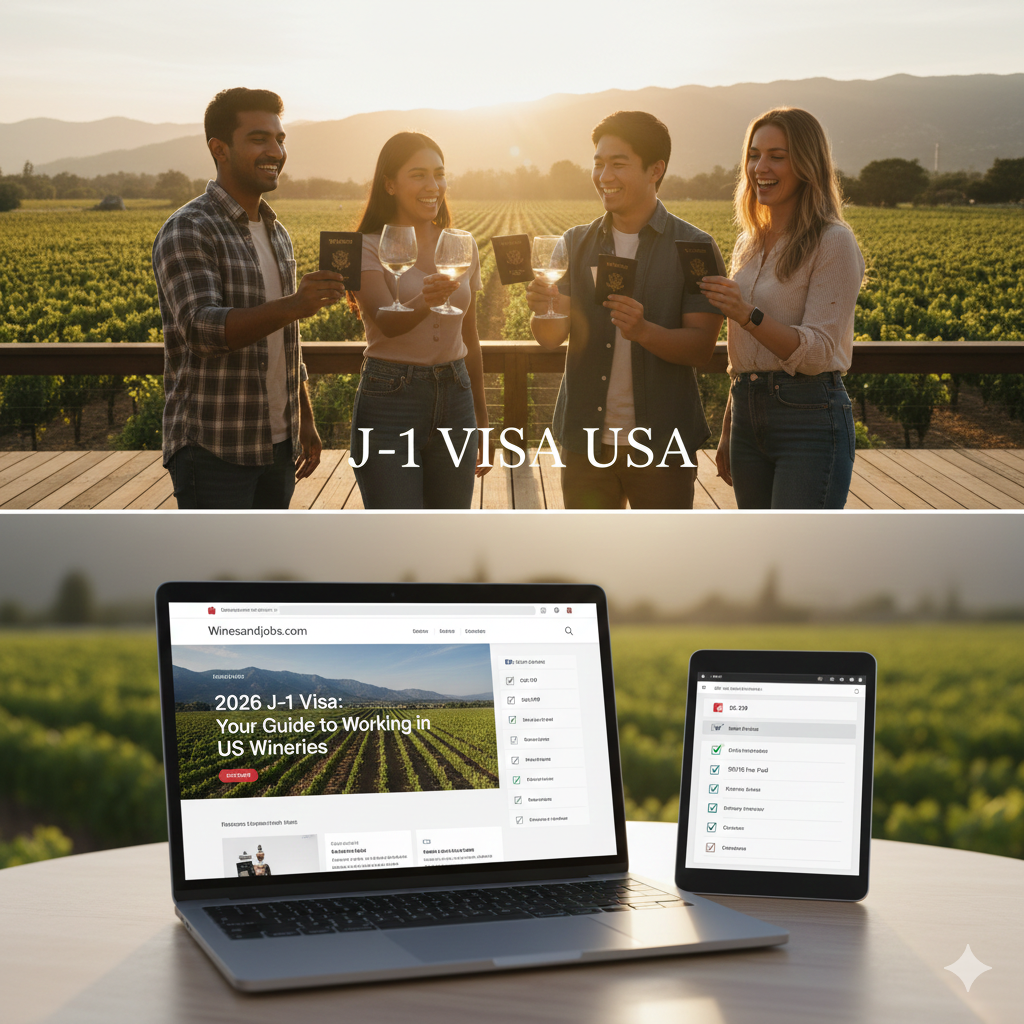
The J-1 visa landscape has shifted significantly as we enter 2026. For wine professionals and students planning to head to the US for the upcoming harvest, there are several “must-know” updates that go beyond the usual paperwork.
Here is a blog post tailored for you, Winesandjobs.com, to keep your community informed.
🍇 US J-1 Visa Updates for 2026: What’s New for the Wine Industry?
If you’re a winemaker, viticulturist, or student aiming for a 2026 vintage in the USA, the rules of the game have changed. From new “Visa Integrity Fees” to stricter interview requirements, here is the breakdown of what you need to know to secure your J-1 Intern or Trainee visa this year.
1. The “Fixed Admission” Shift (Goodbye D/S)
For decades, J-1 holders were admitted for the “Duration of Status” (D/S). As of late 2025, the US has moved toward Fixed Date Admissions.
- What changed: Instead of an open-ended stay based on your program, your I-94 will now have a specific end date (usually your program end date plus a 30-day grace period).
- The Impact: If your winery asks you to stay an extra month for a late harvest, you must file a formal extension (Form I-539) with USCIS rather than just updating your DS-2019.
2. New “Visa Integrity Fee”
Starting in 2026, many non-immigrant visa categories are seeing a new Visa Integrity Fee of approximately $250 USD.
- This is in addition to your SEVIS ($220) and DS-160 ($185) fees.
- Always check with your sponsor (like CAEP or Cultural Vistas) to see if this fee is included in your program package or if you need to pay it separately at the consulate.
3. Mandatory In-Person Interviews
The “Interview Waiver” or “Dropbox” era is largely over.
- The Rule: Nearly all J-1 applicants, including those who have held a US visa before, are now required to attend an in-person interview at a US Embassy or Consulate.
- Location Matters: You must apply in your country of nationality or legal residence. For Indian citizens currently working in New Zealand, this means you may need to apply through the US Consulate in Auckland or return to India, as “Third-Country” processing has become much more restricted.
4. The 212(e) “Home Residency” Update (Good News!)
One of the biggest hurdles for J-1 holders has been the requirement to return to their home country for two years after the program.
- The Update: In a major shift, the “Skills List” for many countries (including India) was updated recently. Many wine-related technical skills have been removed from the list, meaning you might no longer be subject to the two-year rule unless your program was government-funded.
5. Social Media Vetting
Expect your online presence to be part of the application.
- Consular officers now have the authority to review social media handles provided in your DS-160. Ensure your LinkedIn and professional profiles align with the “Trainee” or “Intern” intent of your visa.
Quick Comparison: Intern vs. Trainee
| Feature | J-1 Intern | J-1 Trainee |
| Who is it for? | Current students or recent grads (within 12 months) | Professionals with a degree + 1 year exp. OR 5 years exp. |
| Max Duration | 12 Months | 18 Months (12 for Agriculture/Wine) |
| Primary Goal | Learning/Practical Experience | Professional Development |
Pro-Tip for Winesandjobs.com Seekers: US wineries are already beginning their recruitment for the August–October harvest. Because interview slots are more competitive than ever, we recommend having your Host Company Agreement signed no later than April to allow for 3–4 months of processing time.
Cheers !!!